OPTIMIZE, CONTROL
Drive your ROI with Qanty
Turn waiting time into actionable data.
In the U.S. economy, time is the ultimate currency. For a bank or healthcare provider, a crowded lobby isn’t just an annoyance—it’s a revenue leak. For an Operations Director, long lines represent a hidden tax on profitability and a direct pipeline sending your customers to the competition.

Queue Theory, Flow Optimization, and Customer Experience (CX) aren’t just buzzwords; they are the mathematical backbone of operational excellence. Discover how to turn passive waiting time into a competitive advantage.
Queue Theory is the mathematical study of waiting lines and service flows. Its business goal is to find the financial “sweet spot” between the cost of increasing service capacity (staff/infrastructure) and the opportunity cost of losing customers due to friction and delays.
Balancing cost and service. Often, U.S. businesses in retail, banking, or healthcare view lines simply as a sign of “high demand.” However, through the lens of operational intelligence, a standing queue is a symptom of process inefficiency.
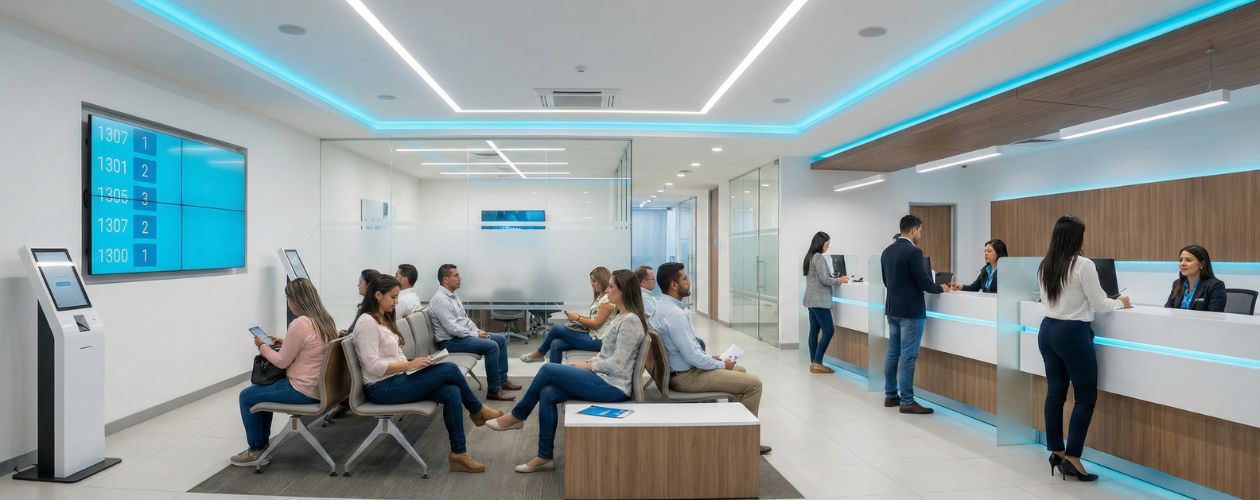
A queuing system isn’t just people standing around; it comprises three critical elements that define your branch’s efficiency:
Today, the “queue” is omnichannel. It includes users on hold, tickets pending in your CRM, and chat requests. Ignoring the science behind these flows is like navigating a ship without a compass.
“Wait time is the first metric of respect a brand shows its customers.”
Understanding the flow equation. For Ops Managers, Little’s Law is the formula that prevents location meltdown. While it looks academic, its logic is vital for workforce management and staffing.
The formula defines your system’s health:
Let’s break it down for business:
The strategic takeaway: If your branch is overcrowded (high L), and you don’t want to throttle sales by stopping entries (λ), the only mathematical solution is to drastically cut the Time in System (W). This is where Qanty’s technology hits the bottom line: streamlining flow without necessarily hiring more headcount.

The “High Utilization” Trap
Many managers push for 100% staff utilization. This is a fatal error. Mathematically, when utilization exceeds 85%, wait times don’t grow linearly—they spike exponentially. A system without slack collapses under the slightest variance.
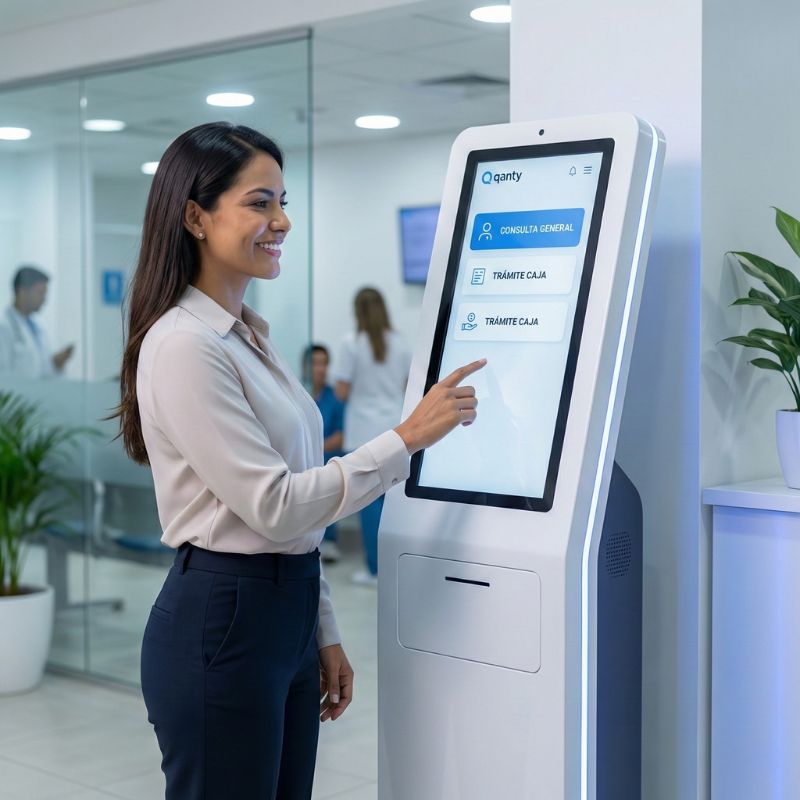
Managing emotions. David Maister, the renowned authority on service management, proved that customer satisfaction depends less on the stopwatch and more on how that time feels. Math (Little’s Law) handles the reality; psychology handles the perception.
Applying theory and psychology to improve your operation’s ROI.
The best line is the one that doesn’t exist. Allow users to “get in line” via Mobile or Web before they arrive. This reduces on-site congestion (L) without hurting business volume.
Not all transactions are created equal. Segment customers at entry (Kiosk/QR) to route quick tasks to express lanes, lowering the overall average wait time (W).
Broadcast estimated wait times on screens. Knowing “15 minutes remaining” gives control back to the customer and drastically reduces walk-away rates.
It enables precise workforce management based on actual demand, preventing overstaffing during lulls or service collapses during peak hours that lead to overtime and lost revenue.
It is the formula (L = λ × W) relating the number of people in your venue to service speed. It helps diagnose if congestion is a demand issue (marketing) or a throughput issue (operations).
Yes. Operationally and psychologically, the single line (like at Whole Foods or airports) is superior. It’s perceived as fairest (First In, First Out) and prevents one slow transaction from blocking an entire lane of customers.
Perceived wait time is often longer than actual time if the customer is anxious or bored. Digital signage and engagement strategies can reduce the perceived wait by up to 30%.
Platforms like Qanty provide web scheduling, virtual queuing, self-service kiosks, and digital signage, integrating data to optimize flow in real-time.

Let’s discuss how Qanty can improve operational efficiency at your U.S. locations.
Physical lines frustrate customers and burn out staff. Discover how digital queue management transforms waiting into a smooth, controlled experience, optimizing your operations from day one in clinics, government offices, universities, and retail.
This article explores how a service orchestration platform eliminates the uncertainty of waiting. We’ll break down its key capabilities, from real-time monitoring to analytics, and the direct impact on customers, staff, and management.
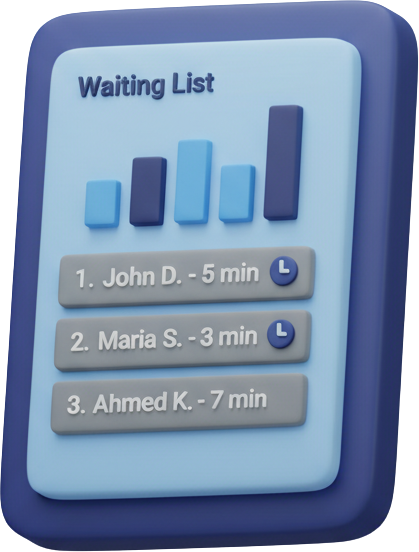
Turn digital queue management into customer loyalty
Transforming how people wait in line is no longer optional. Whether at a clinic, government office, university, or retail store, customers expect speed, clarity, and convenience. The traditional physical line fails on all three counts, creating friction and frustration.
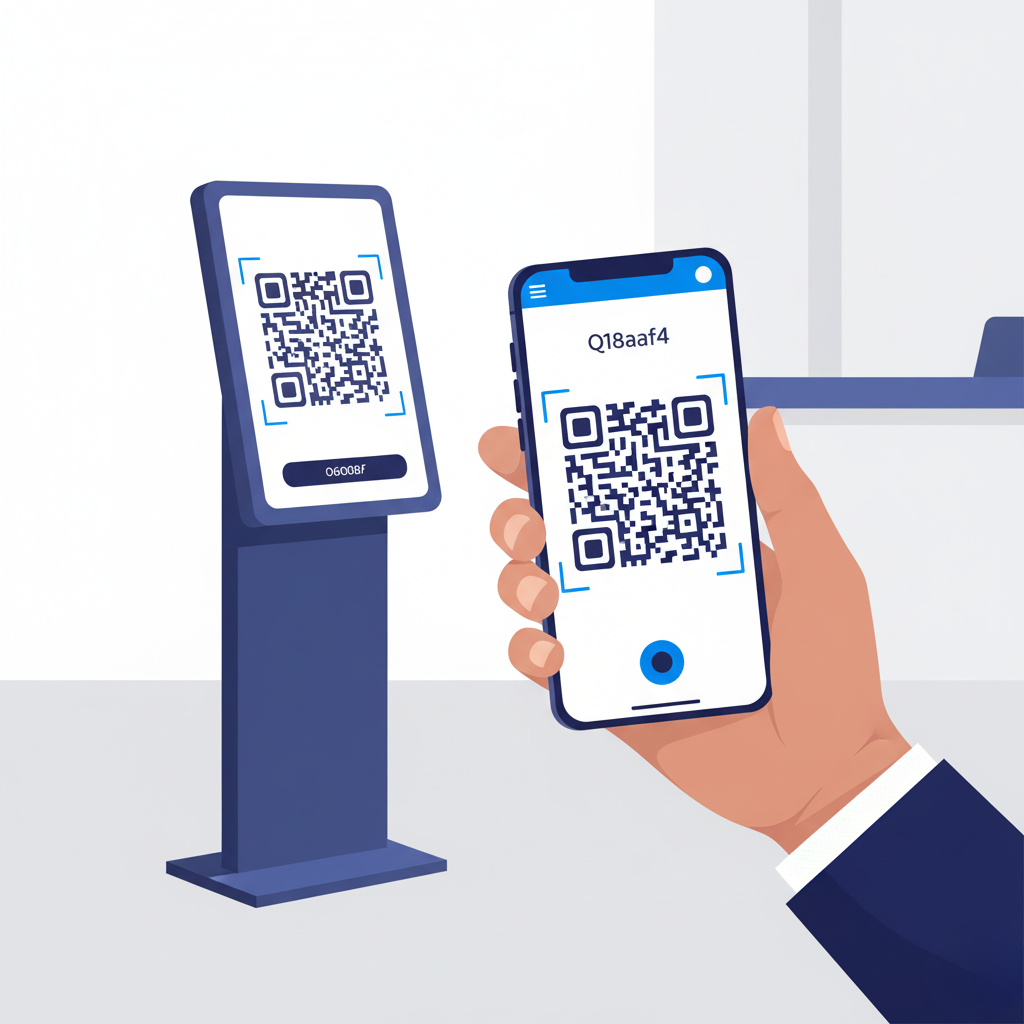
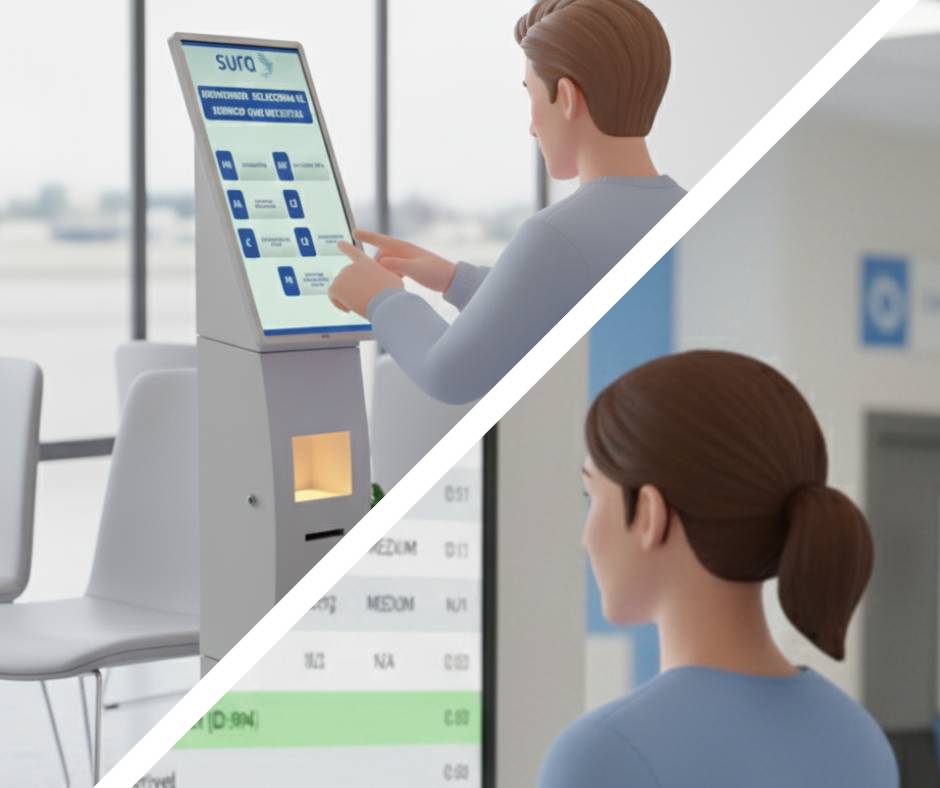
Qanty replaces the frustration of physical lines with a digital experience. When customers arrive, they can easily take a ticket from a kiosk, scan a QR code, or join the queue online using their phone. Once in line, Qanty keeps them informed in real time—showing estimated waiting times, current position, and even notifications when it’s almost their turn.
This empowers visitors to relax, move freely, or prepare for their appointment instead of standing and waiting.
The True Cost of Waiting?
Studies show that 75% of customers are only willing to wait a maximum of 5 minutes. Long wait times are consistently rated the #1 frustration in service experiences.
Qanty is more than a ticketing tool — it’s a complete queue and service orchestration platform. It’s built for modern organizations that need visibility and control over their entire service flow.
Key capabilities include:

An effective digital queue system creates a win-win-win scenario, enhancing all sides of the service experience.

Qanty means freedom and predictability. No more uncertainty about when they’ll be attended, which dramatically reduces frustration and improves their perception of your service.
This means organization and control. No more chaos at the counter. Staff can manage the flow with smart data, anticipate demand, and focus on service delivery.

Qanty delivers clarity. Visual dashboards and reports make it easy to identify bottlenecks, measure service quality, and improve overall performance based on real data.

Your service platform must be reliable and secure. Qanty is built on a serverless web architecture (Vue + Firebase/GCP), which ensures:
This modern foundation guarantees that your service operations are always on, always secure, and always up-to-date.
To ensure a smooth transition and maximize your return on investment, follow these key best practices:
The right technology isn’t just a tool; it’s the foundation for a superior and efficient service strategy.
It’s a system that replaces physical lines. It allows customers to register (via mobile, QR, or kiosk) and wait for their turn remotely, receiving real-time updates on their position and estimated wait time.
Yes. A true service orchestration platform like Qanty is built to scale. It allows management to monitor and manage performance across multiple locations or departments from a single, centralized dashboard.
Any industry where people wait. This includes clinics and hospitals (healthcare), government offices, bank branches, university service desks, and retail stores (especially for customer service or click-and-collect).
It eliminates counter chaos and the constant ‘how much longer?’ questions. Staff get an organized, digital view of demand, allowing them to manage the flow, reduce stress, and focus on quality service instead of crowd control.
Visit www.qanty.com to discover how your organization can transform its queue management today. Request a personalized demo to see it in action.
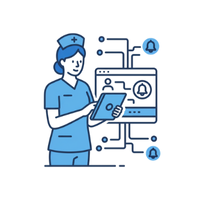
Emergency rooms are incredibly demanding. Every minute counts, but many ERs still rely on calls or radios to notify nurses of a patient’s arrival. That’s where Qanty, an intelligent Queue Management System (QMS), comes in. We connect the front desk to the triage and treatment staff in real time, ensuring nurses are instantly informed to improve response times and efficiency.
Optimize patient flow and eliminate manual calls with Qanty.
When a patient checks in at the ER front desk or kiosk, Qanty automatically updates a centralized dashboard accessible to all staff. Nurses in triage or treatment areas can see:
This eliminates the need for manual calls or repeated updates, giving nurses instant awareness of who’s waiting and how long they’ve been there.
With live updates, the triage team can act faster. Qanty’s system allows hospitals to define priority tags or alerts. If a patient reports chest pain or another critical symptom during check-in, the system automatically flags it to nurses.
This proactive alerting helps ensure that no critical case goes unnoticed, even during high-traffic hours.
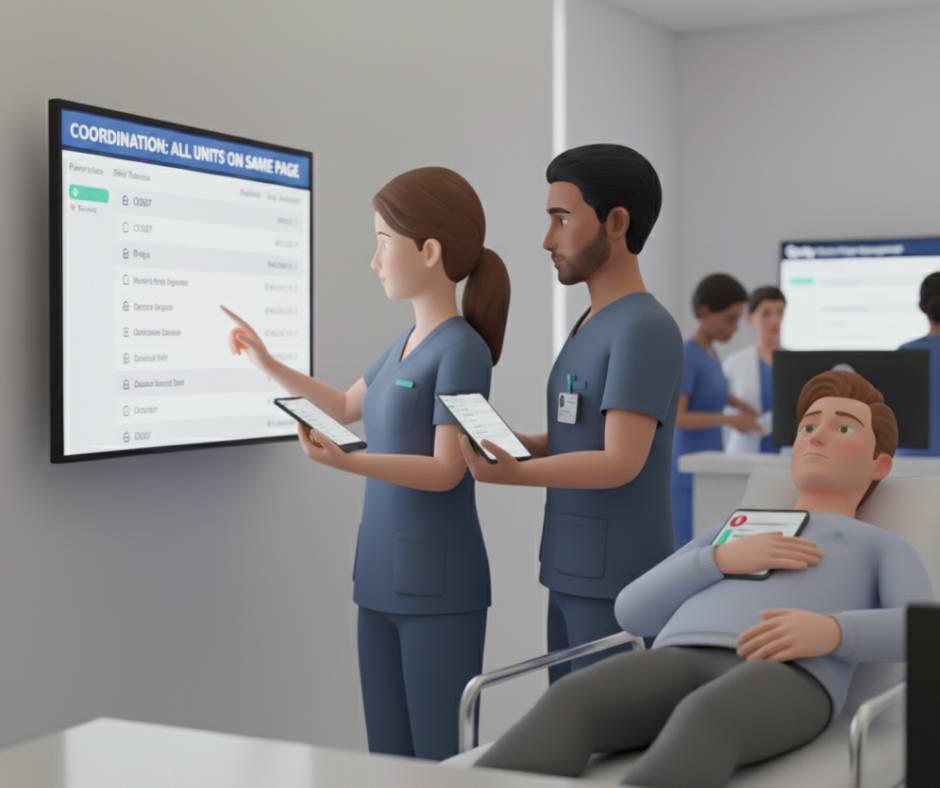
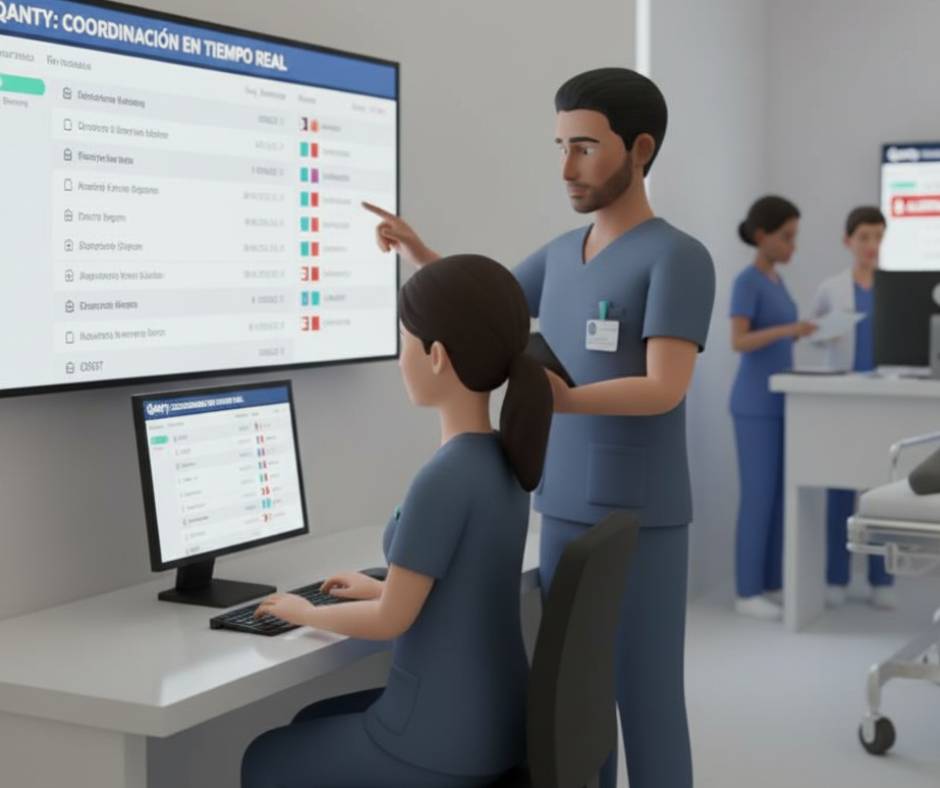
In busy ERs, communication breakdowns are common. Qanty bridges this gap by enabling seamless coordination between departments. Everyone—from registration staff to triage nurses—works off the same data in real time.
Notifications can also be configured to appear on monitors, tablets, or mobile devices, ensuring that the right person sees the update immediately, no matter where they are in the unit.
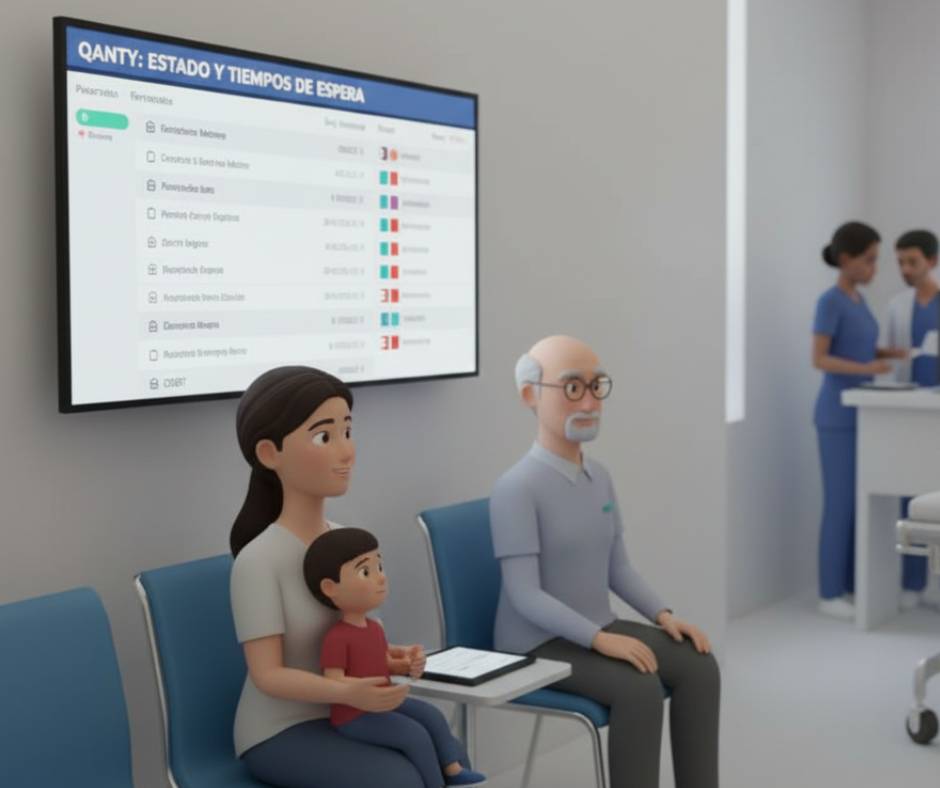
Long waiting times are one of the main sources of frustration in ERs. With Qanty, hospitals can display estimated waiting times or status updates on patient-facing screens, improving transparency and reducing anxiety.
When patients feel the process is organized and that staff are aware of their arrival, overall satisfaction increases significantly.
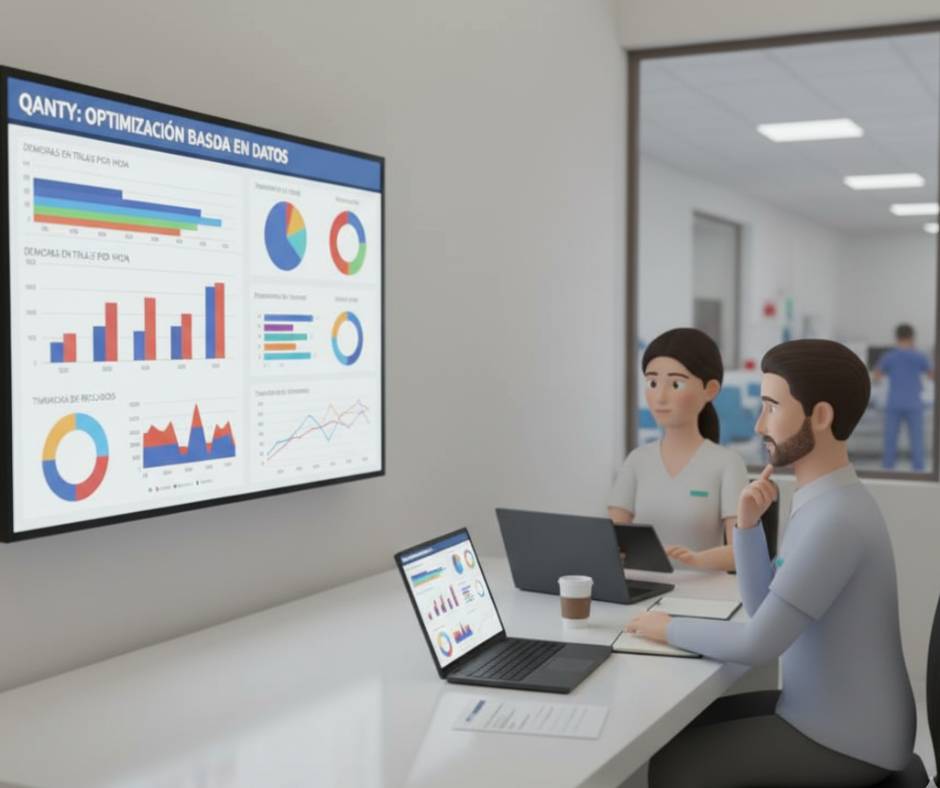
Every check-in, wait time, and service duration is recorded in Qanty’s analytics system. This provides valuable insights for hospital administrators to identify bottlenecks, measure staff response times, and optimize resource allocation.
For instance, data might reveal that certain hours of the day consistently have longer triage delays — helping managers adjust staffing accordingly.
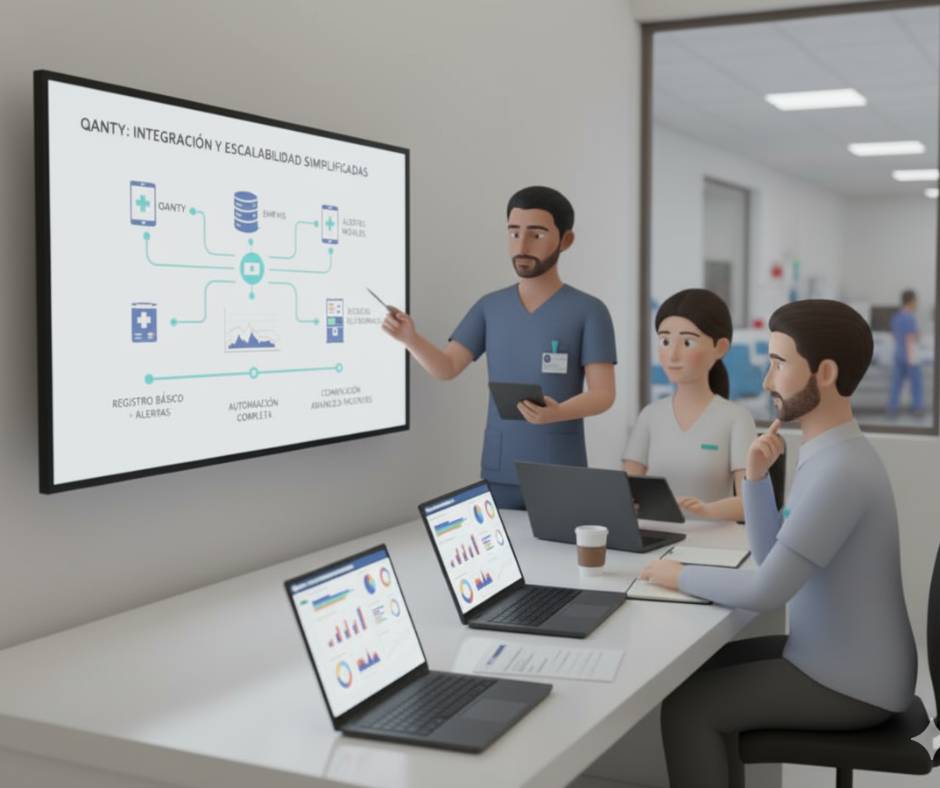
Qanty can integrate with existing hospital systems (EHRs, patient management tools, or internal alert systems), reducing the learning curve for staff.
Its modular design allows ERs to start with basic check-in and alert functions and later expand to include full workflow automation, kiosks, or patient communication tools.
Did you know?
In busy emergency rooms, communication breakdowns are a leading cause of treatment delays and patient dissatisfaction. A real-time notification system closes this gap, instantly connecting the front desk with the triage team.
Qanty uses a centralized dashboard that updates in real time. These notifications can be displayed on large monitors in nursing stations, as well as on staff tablets or mobile devices, ensuring they see the alert no matter where they are.
The system allows hospitals to configure “priority tags” or automatic alerts. If a patient checks in with critical symptoms (like chest pain), the system automatically flags them with high priority on the dashboard, ensuring the triage team identifies them immediately.
No. Qanty is designed to integrate with your existing systems, including EHRs and other patient management tools. It acts as a communication and workflow bridge that enhances the systems you already use, without replacing them.
Qanty records every step of the process. You can analyze key metrics like total wait times, triage duration, staff response times by hour, peak traffic, and bottlenecks. This allows administrators to make data-driven decisions to optimize staffing and workflows.
Discover how Qanty’s management system can eliminate communication gaps, reduce wait times, and empower your nursing team to focus on delivering quality care.
In this guide, you will learn what NPS is, how it is calculated through Promoters, Passives, and Detractors, and why it is considered a benchmark for growth. We will also explore the steps to implement NPS in your business—from survey design to data analysis—and share best practices to turn feedback into actionable strategies.
The Net Promoter Score (NPS) is a key metric to measure customer loyalty and predict growth. Based on a simple question, it classifies responses into Promoters, Passives, and Detractors, offering a clear view of brand perception. With NPS, businesses can track satisfaction, identify areas for improvement, and design strategies to strengthen customer relationships and long-term engagement.

Turn satisfaction into growth with NPS insights
In today’s highly competitive market, understanding how satisfied and loyal your customers are has become a strategic priority. One of the most widely used tools to measure this is the Net Promoter Score (NPS). This simple yet powerful metric helps organizations assess the likelihood that customers will recommend their brand to others, offering valuable insight into customer satisfaction and loyalty.

The Net Promoter Score (NPS) is a metric based on one straightforward question:
“On a scale of 0 to 10, how likely are you to recommend our company/product/service to a friend or colleague?”
Based on their response, customers are grouped into three categories:
The NPS is calculated by subtracting the percentage of Detractors from the percentage of Promoters:
NPS = %Promoters − %Detractors
The score can range from -100 to +100, giving businesses a clear indication of overall customer sentiment.
Key Fact on Customer Experience
NPS not only measures satisfaction, but also predicts customer loyalty. Companies with a high NPS grow up to 2.5 times faster than their competitors.
The Net Promoter Score (NPS) has become a global standard because it delivers several key benefits that go beyond traditional satisfaction surveys. Its simplicity and action-oriented nature make it one of the most effective tools for improving customer experience.
One core question makes it easy to collect and interpret results, reducing complexity for both customers and companies.
It measures true commitment through the willingness of customers to recommend, not just short-term satisfaction.
Companies with higher NPS often experience stronger organic growth, as happy customers generate referrals.
NPS makes it possible to compare results over time, across industries, and against competitors.
It highlights areas that need improvement and helps organizations focus on strategies that enhance customer experience.
To get the most value out of Net Promoter Score (NPS), it’s essential to implement it in a structured and consistent way. Each step ensures meaningful insights and drives action toward improving customer experience.
Decide what you want to measure: overall brand experience, satisfaction after a specific purchase, or feedback after support interactions.
Keep the NPS question simple. Add an open-ended follow-up like: “What’s the main reason for your score?” to get context-rich feedback.
Send surveys at key touchpoints: after a purchase, following support, or periodically (quarterly/biannually) to track long-term loyalty.
Identify Promoters, Passives, and Detractors. Calculate your NPS and review open comments to uncover recurring themes.
Use insights to reduce Detractors, strengthen Promoters’ loyalty, and convert Passives into Promoters through improvements.
Share findings internally, communicate improvements, and show customers that their feedback drives change—building trust and engagement.
To maximize the value of the Net Promoter Score (NPS), it’s important to follow a set of best practices that ensure accuracy, consistency, and actionable insights for your business.
At Qanty, we can help you easily implement and track this metric for your business. Contact us today to schedule a free consultation.
The Net Promoter Score (NPS) is a metric that measures customer loyalty by asking how likely they are to recommend your product or service to others.
NPS doesn’t just measure satisfaction—it measures loyalty. It helps identify promoters, passives, and detractors, allowing you to predict growth and improve the customer experience.
It’s best to keep surveys short and focused, avoiding over-surveying customers to get more accurate and useful responses.
Analyze feedback from promoters and detractors to find areas for improvement. Combine NPS with other customer experience metrics for a fuller picture.
Yes. Companies with high NPS often see organic growth because satisfied customers generate referrals and recommend your brand to others.
Every rating, every comment, every NPS score tells a story about how your customers feel. With Qanty, you can turn those insights into real actions that elevate satisfaction, build stronger relationships, and grow your brand with confidence.

Time is at the core of Customer Experience. Long, unpredictable wait times frustrate clients and damage brand perception. With Qanty’s scheduling and virtual queue management solutions, businesses can reduce waiting time, increase NPS, and turn efficiency into lasting customer loyalty.
Reduce wait times and boost customer satisfaction.
Customers often arrive at a business ready to be served, only to face an unpredictable wait. They might stand in a long line, sit in a crowded waiting room, or have no idea when their turn will come. Every extra minute feels longer when there’s no clear timeline, and frustration builds quickly.
This wasted time doesn’t just create inconvenience, it affects the way people view your brand. Long, unmanaged waits are one of the biggest drivers of low Net Promoter Scores (NPS), reducing customer loyalty and making it less likely that people will recommend your services to others.

Qanty’s system is designed to remove uncertainty and give customers control over their time. Our appointment scheduling feature allows people to book a service slot before they arrive, ensuring they are served promptly.
For walk-in customers, Qanty’s virtual queue management lets them join a queue from anywhere through the Qanty app. While waiting, they can run errands, work, or relax instead of staying in a waiting room. Real-time notifications keep them updated on their place in line and alert them when it’s nearly their turn.
The result is a service experience where customers feel their time is respected, staff can work more efficiently, and managers can track and improve performance using Qanty’s reporting tools. By cutting wait times and reducing uncertainty, businesses see measurable improvements in NPS, as customers are more willing to share positive feedback and recommend the service.
When the time factor is handled well, customer satisfaction rises naturally. People remember the businesses that made their visit easier, not the ones where they sat and waited. A higher NPS is the reflection of that positive memory, proof that customers are not just satisfied but eager to return and refer others. Qanty gives both customers and businesses the ability to make every minute count and turn that efficiency into lasting loyalty.
Key Fact on Customer Experience
Recent customer experience research shows that over 65% of consumers consider reduced wait times as one of the most important factors in a positive service experience. This highlights that queue optimization is a direct investment in customer loyalty and brand reputation.
It gives customers control over their time, reduces frustration, and creates a smoother service experience.
Unmanaged waits lower NPS, decreasing loyalty and the likelihood of customer recommendations.
Yes, it optimizes staff allocation and reduces idle time, improving efficiency.
Through real-time updates and alerts in the Qanty app when it’s nearly their turn.
Don’t let unpredictable waits damage your brand’s reputation. With Qanty, you can give customers control over their time, improve efficiency, and boost loyalty. Contact us today to discover how our tailored solutions can help your business make every minute count.
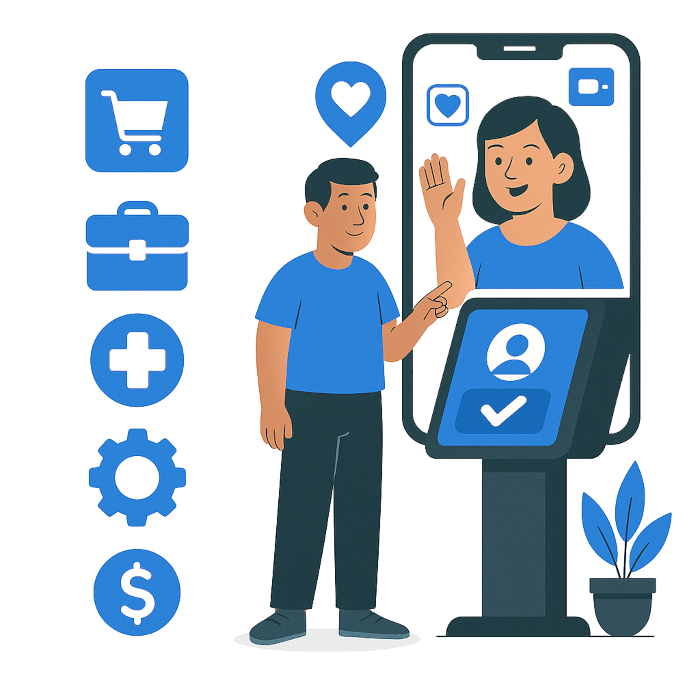
At Qanty, we’re redefining customer experience through smart technology. Our queue management system is built to reduce wait times, improve service, and boost operational efficiency. It integrates seamlessly with self-service kiosks, smart service points, and video call modules—all powered by leading global brands that ensure quality, innovation, and dependable support.
At Qanty, we create technology solutions with a clear goal: to transform the way people experience customer service. And we do it with one non-negotiable principle: we only work with the best brands in the market. Our queue management system, for example, is built with components from Intel, HP, Epson, Elo Touch, Dell, Kingston, Honeywell, Bixolon, and Star Micronics.

These aren’t just logos—they’re a guarantee of performance, reliability, and support. They’re our technology partners, helping us deliver solutions that are robust, efficient, and scalable—especially in high-demand environments where every second matters and user experience defines business success.
Our queue system isn’t just about organizing lines—it’s a core part of a larger service ecosystem. It connects with self-service kiosks, smart counters, and video call modules, all tailored to your organization’s specific needs and supported by high-quality hardware you can trust.
Thanks to the compatibility and quality of the devices we use, we ensure smooth and lasting integration between software and hardware—no surprises, no last-minute fixes.
In industries like retail, entertainment, healthcare, or public services, technology can’t afford to fail. That’s why we choose to work with manufacturers that share our commitment to excellence. Every Elo Touch screen, every Intel processor, every Epson printer, and every Honeywell terminal is part of a bigger solution—designed to perform, last, and grow with your business.
These brands help us go beyond expectations: enhancing your customer experience, streamlining your operations, and making your team’s job easier. That’s the real value of building on a solid foundation.
Today, everyone’s talking about digital transformation. At Qanty, we believe that transformation starts with something as essential as excellent customer service. And to make it happen, you need technology that works—technology that’s tested, proven, and backed by trusted brands.
With Qanty, you’re not just implementing a queue management system—you’re investing in quality.
Top Video Banking Solutions for credit unions: transform member service with human-centered digital banking. As credit unions navigate a rapidly evolving financial services landscape, they face growing pressure to offer convenient and personalized digital experiences. Video banking has emerged as a powerful tool, enabling them to maintain close, face-to-face service while improving accessibility and operational efficiency. In this article, we explore the top video banking platforms helping credit unions succeed in today’s digital-first environment.

Video banking bridges the gap between in-branch service and digital banking. It allows members to connect face-to-face with credit union representatives through secure video channels—either from their home, a mobile device, or a dedicated kiosk in a branch or remote location.
Key benefits include:
Best for: Appointment-driven video banking and member engagement
Coconut Software provides a powerful scheduling and engagement platform tailored to credit unions and banks. Its video banking capabilities are tightly integrated with appointment booking and queue management tools, ensuring a smooth and timely experience for members.
Key Features:
Coconut stands out for helping credit unions reduce no-shows, boost operational efficiency, and create seamless omnichannel member journeys—from booking to video call.
Best for: Scheduling and knowledgebase integration
While known primarily for appointment scheduling, Engageware also integrates with video conferencing tools and knowledgebases to power secure, scheduled video banking experiences. It’s ideal for credit unions that want to streamline complex member services like loan applications or financial planning.
Key Features:
Best for: Smart queueing and scalable video banking
Qanty combines a virtual queue management system with video banking to offer a modern, fully integrated solution for credit unions. It allows members to join a virtual line, get notified of their turn, and connect via secure video—all without waiting in physical branches.
Key Features:
Qanty is especially useful for credit unions aiming to manage both walk-in and remote interactions efficiently, ensuring no member is left behind.
When selecting a video banking solution, credit unions should consider:
Video banking is no longer a luxury. It is a necessity for credit unions aiming to deliver modern, high-touch service in a digital world. Top Video Banking Solutions for credit unions help transform member service with human-centered digital banking, making it easier to enhance remote accessibility, reduce operational costs, and strengthen member relationships. Choosing the right platform can truly be a game changer.
By carefully evaluating the platforms above, credit unions can make informed decisions that align with their strategic goals, IT capabilities, and member expectations.
Qanty revolutionizes Queue Management at Checkout by offering an innovative solution to enhance customer experience and reduce waiting times. Its automated system optimizes operational efficiency and streamlines processes in chain stores. Customers can conveniently book their turns from mobile devices, eliminating physical lines and making better use of their time. Moreover, Qanty adapts to each business’s unique needs, seamlessly integrating into websites or apps to provide a personalized experience aligned with the brand.
In chain stores, one of the main concerns for customers is the wait time at checkout. Long lines can lead to frustration and negatively impact the perception of service. This is where Qanty makes a difference, offering an efficient solution for managing checkout queues and transforming the customer experience.
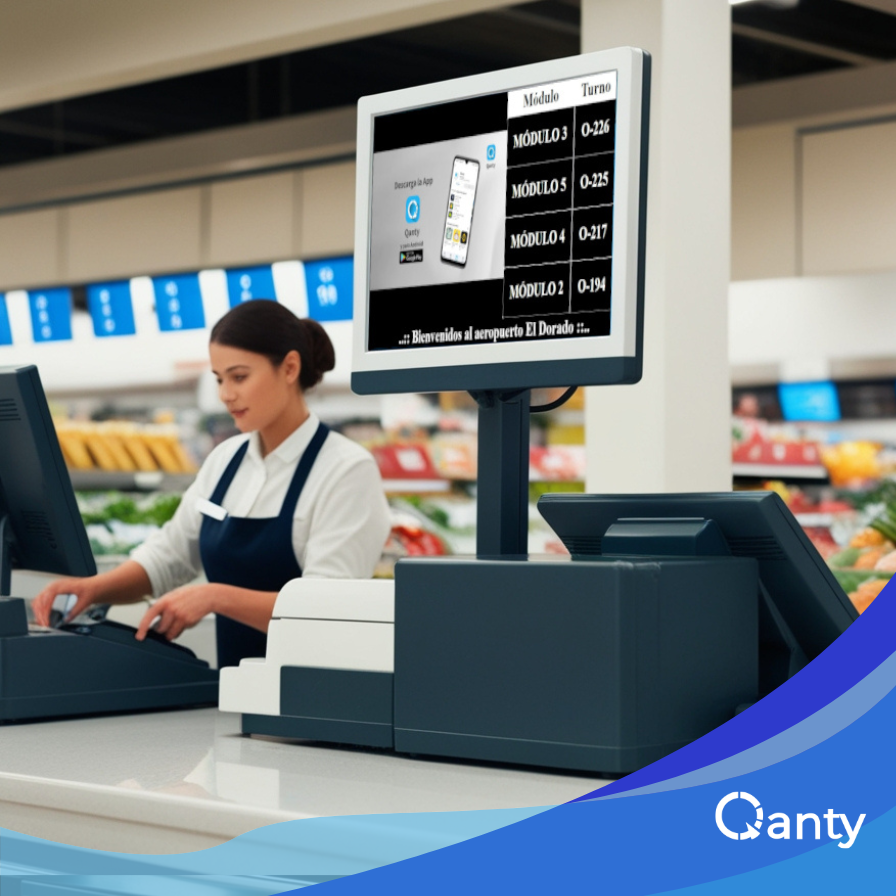
With Qanty, customers can easily reserve their spot at checkout, choosing the location and time that best suit them from the comfort of their mobile device. This eliminates the need to wait in physical lines, allowing shoppers to continue exploring the store or engage in other activities while they wait for their turn.
One of the main advantages of Qanty is the reduction of perceived wait time, enabling customers to make better use of their time. The ability to schedule a turn makes the shopping experience more efficient and enjoyable.
In addition, Qanty enhances operational efficiency with an automated turn assignment system, optimizing staff workflow. This eliminates conflicts related to arrival order and improves organization at the checkout point.
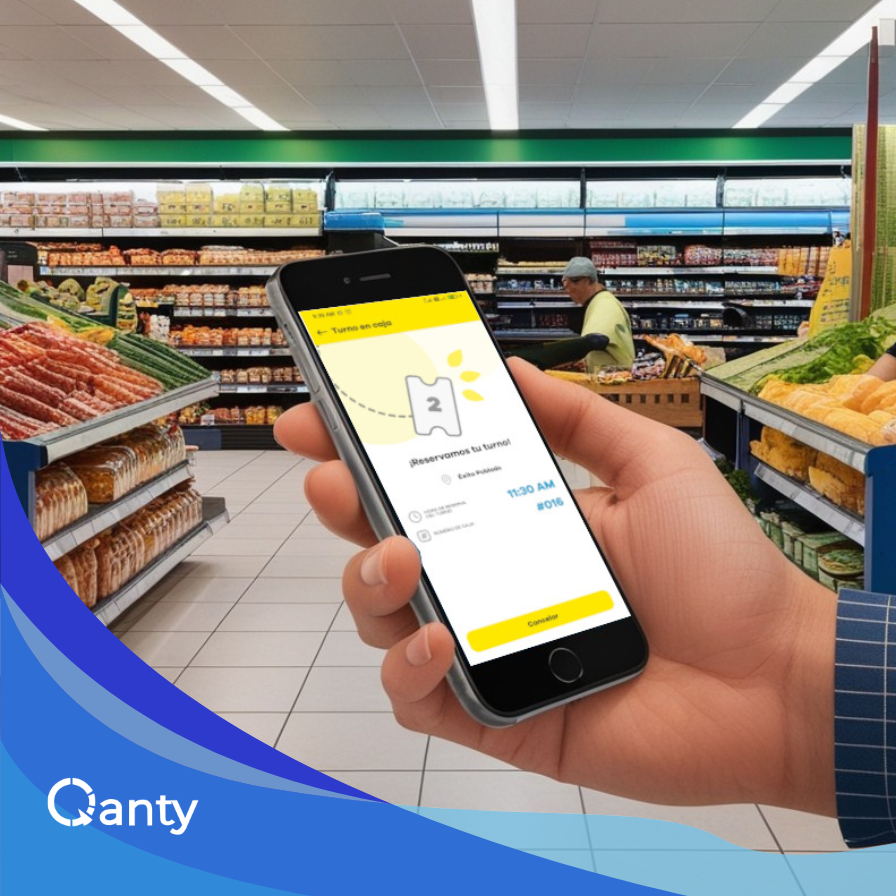
A significant benefit of Qanty is its ability to adapt to the specific needs of each chain store. The solution can be easily customized and integrated into the store’s website or app, providing a seamless experience that aligns with the brand’s identity.
When customers feel that their time is valued, they are more likely to return. By integrating Qanty into the shopping experience, chain stores demonstrate their commitment to customer satisfaction, fostering long-term relationships and encouraging positive word-of-mouth.
Qanty not only streamlines the checkout process but also helps create a more enjoyable and modern shopping environment. If you’re looking for a solution to improve the organization of your store and elevate your customer experience, Qanty is the answer.
Get Started Today
Transform the way your customers experience shopping. With Qanty’s checkout queue solution, you can offer a faster, more personalized, and modern service. Make every visit to your store unforgettable—Qanty makes it possible!
Service graders allow for effective service evaluation by collecting real-time satisfaction surveys. User feedback is gathered immediately, providing valuable insights to improve service quality and customer experience.
Service graders are tools designed to measure the quality of service in real time. They enable customers to provide instant feedback on the service they receive. These devices are strategically placed in locations where users can quickly and easily rate their experience. This provides accurate data on staff performance and service quality.
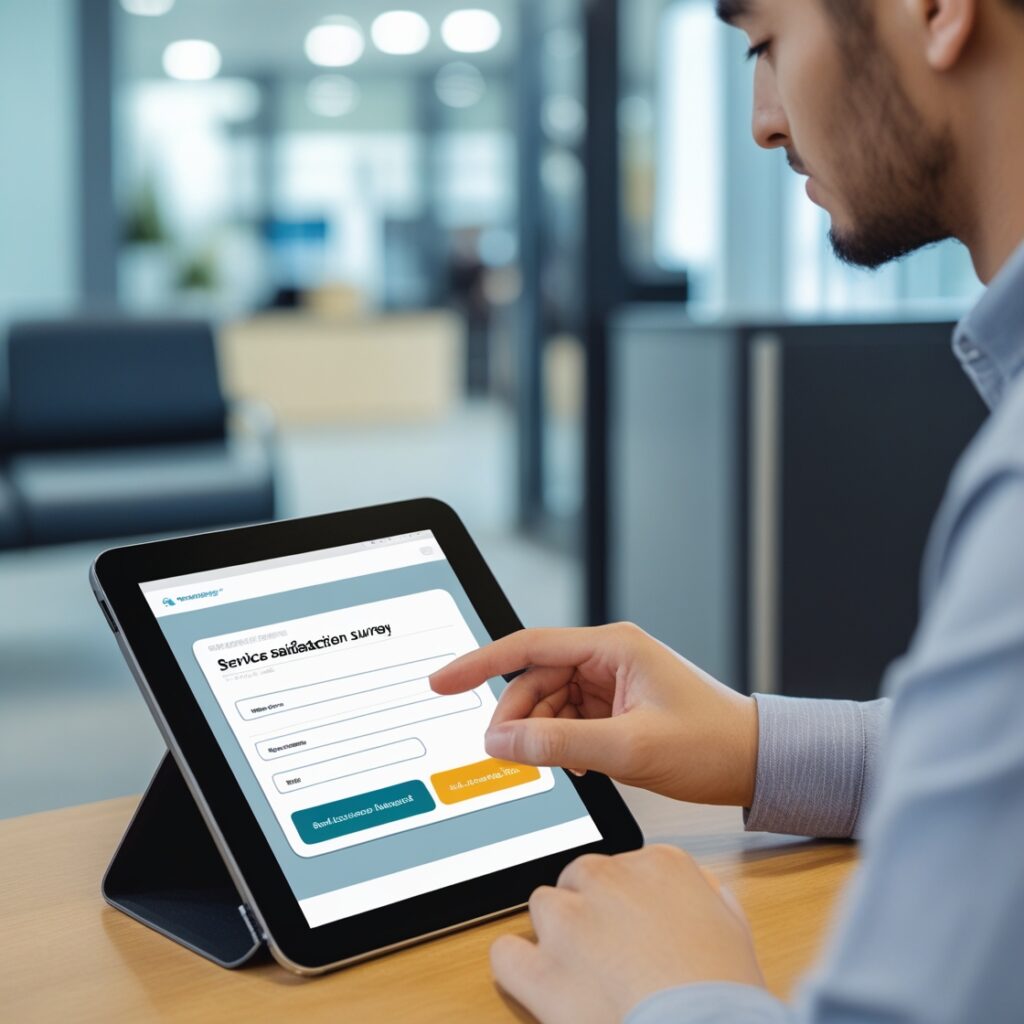
One of the key benefits of service graders is the ability to obtain satisfaction surveys instantly. Customers rate the service while receiving attention, ensuring that the data is relevant and up-to-date. This immediate feedback is essential for businesses aiming to continuously improve the customer experience. Having accurate and timely information enables companies to quickly identify areas for improvement.
Service graders help manage the customer experience more effectively by focusing on specific aspects of service. Responses focus on the service provided at that moment, delivering relevant data for evaluating service quality. This information enables quick decision-making to adjust the service in real time and ensure customer satisfaction.
Additionally, using feedback systems helps create a more organized and fair environment. Every customer has the opportunity to rate their experience equitably, improving the company’s image. The system ensures that each user can share their feedback without disrupting daily operations, fostering trust in the organization.
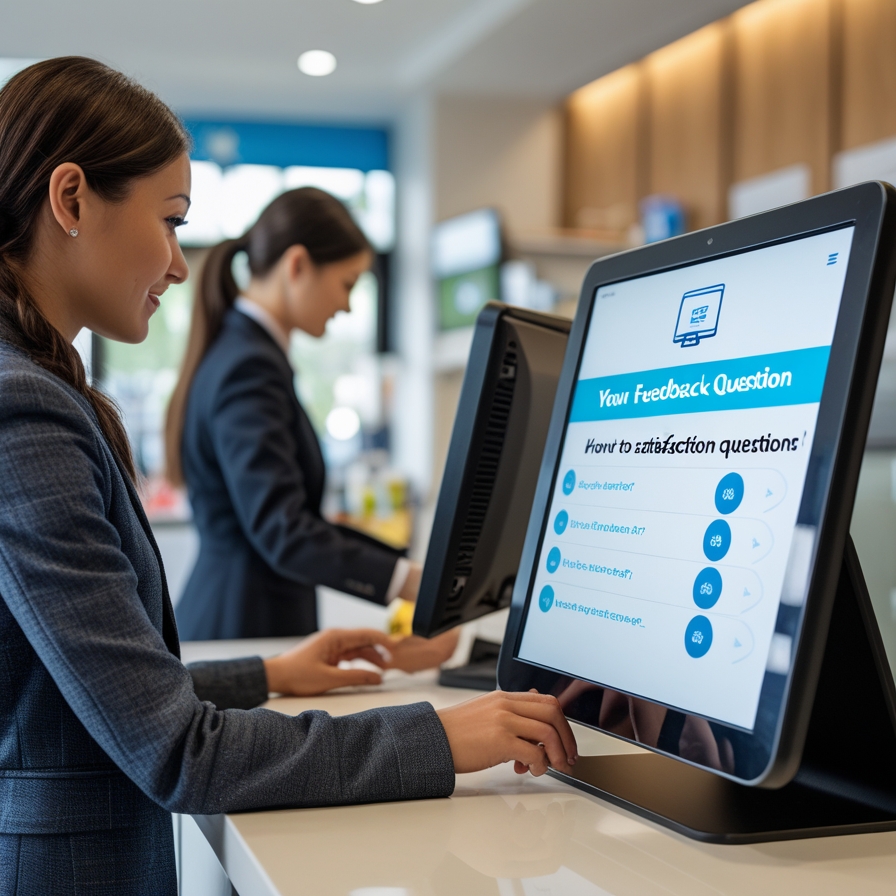
Service graders offer businesses an effective way to measure and improve service quality. With the ability to gather real-time feedback, companies can optimize not just daily operations, but also their relationship with customers. This approach provides a clear view of what is happening during the service, enabling quick and precise adjustments. Implementing this system boosts efficiency and strengthens customer trust and satisfaction, which is crucial in a competitive market.
Using customer satisfaction tools enables immediate feedback, facilitating quick adjustments to enhance the customer experience and strengthen satisfaction.
Improve your service quality and receive real-time feedback with Qanty’s service graders. Obtain satisfaction surveys instantly and make fast, effective decisions. Optimize your customer experience and increase operational efficiency. Start today with Qanty and transform your customer service!
Queue management systems are transforming various sectors such as healthcare, banking, retail, entertainment, and transportation by improving customer experience and optimizing operational efficiency. These systems help manage the flow of people more effectively, reduce wait times, and provide real-time updates. Their implementation enables faster and more efficient customer service, providing a significant competitive advantage for businesses that adopt them.

Queue management systems are revolutionizing how organizations optimize their operations and enhance the customer experience. These systems efficiently manage the flow of people in key sectors such as healthcare, banking, retail, entertainment, and transportation. By reducing wait times and streamlining interactions, businesses not only increase productivity but also gain a competitive edge in an increasingly demanding environment.
In healthcare, these systems are essential for improving patient care. In hospitals and clinics, prioritizing cases based on severity helps reduce wait times in critical areas such as emergency rooms and consultations. Additionally, these tools provide real-time tracking of waits, offering instant updates to patients and enhancing their customer experience. Operational efficiency is also increased by reducing congestion in service areas, thus optimizing the use of medical resources.
In the banking sector, operational efficiency is crucial, and queue management tools offer a practical solution for organizing customer flows. These technologies enable dynamic resource allocation, prioritizing tasks based on demand, which reduces the workload at branches. By implementing these solutions, banks improve customer experience with features like virtual appointment scheduling, minimizing the need for in-person visits. Shorter wait times increase satisfaction and customer loyalty.
The public sector, with its high volume of users, also benefits greatly from these systems. Government offices implement virtual tickets that allow citizens to know their estimated wait time and receive notifications on the status of their services. This organization not only enhances the customer experience but also increases operational efficiency by preventing overcrowding and reducing unnecessary travel. The use of digital tools optimizes human resources and speeds up bureaucratic processes, contributing to the digital transformation of public services.
In retail, these systems are essential for enhancing customer experience in physical stores and shopping malls. They organize lines, making it easier to allocate staff according to customer demand, especially during peak times. Additionally, they use analytics to predict customer flows and organize queues more efficiently, minimizing wait times. This directly impacts the customer experience, as quicker service leads to higher satisfaction and customer retention, driving the digital transformation of retail operations.
The entertainment sector, including cinemas and theme parks, has also found these systems to be a valuable tool for organizing access to events and attractions. They manage ticket sales, entry points, and queues to ensure a smooth experience for visitors. By reducing congestion, they enhance the customer experience and optimize the flow of people, allowing companies to offer quality service, benefiting from operational efficiency.
In sectors like transportation, where punctuality is crucial, queue management tools play a vital role. Airports and train stations use these systems to manage check-ins, security checks, and boarding, reducing the risk of overcrowding and ensuring that passengers can complete their processes more quickly and efficiently. This improves both the customer experience and operational efficiency in the sector, contributing to the overall digital transformation of transportation.
Queue management systems are key to optimizing customer experience and maximizing operational efficiency, driving business competitiveness.
Ready to take your service to the next level and improve your business’s operational efficiency?
With our queue management systems, you’ll optimize your customers’ experience and reduce wait times. Contact us today and let us show you how our solution can transform your operations. We are here to help you take that important step into the future!