ELIMINATE BOTTLENECKS, BOOST RETENTION
Impulsa tu métrica con Qanty
Deploy a world-class waiting experience and regain control of your operations.
The simple act of “taking a number” is one of the most underrated innovations in service history. It replaced the physical stress of standing in line with a mental contract: Your turn is guaranteed. In 2026, this concept has migrated from paper rolls to the palm of our hands, evolving into a sophisticated ecosystem of AI, mobile convenience, and psychological engineering powered by a modern queue management system.
The future of waiting relies on enterprise queue management, intelligent virtual waitlists, and seamless omnichannel routing. By understanding the psychology of waiting, businesses can deploy an Enterprise Queue Management System to reduce operational bottlenecks, empower staff, and turn idle waiting into a profitable, high-end customer experience.
What is a smart queue management system? It is an enterprise operational platform that digitizes the customer waiting journey. By leveraging virtual queues, AI predictive staffing, and omnichannel routing, it transforms physical lines into seamless digital experiences, significantly reducing walkaways and improving overall service efficiency.
Managing customer flow is no longer about maintaining order; it is about reclaiming time. The “Take a Number” system began as a mechanical solution to a human problem: fairness. Before its invention, queues were often chaotic, favoring the loudest or the most aggressive. However, as enterprise operations have scaled, the technology required to orchestrate high-volume traffic has drastically matured.

The journey from physical lines to digital ecosystems represents a fundamental shift in how businesses handle service delivery. In the pursuit of operational excellence, companies have moved through distinct technological eras to arrive at today’s sophisticated platforms.
Modern B2B leaders recognize that isolated queue systems are obsolete. Today, the ability to centralize data across multiple branches, monitor Service Level Agreements (SLAs) in real-time, and dynamically allocate staff is critical for profitability.
“The transition from paper tickets to virtual tokens didn’t just eliminate lines; it gave organizations the power of predictive analytics.”
Did you know?
Research shows that an “unknown wait” feels infinitely longer than a “known wait.” Digital countdowns actively reduce perceived wait times by up to 30%, satisfying the psychological need for certainty.
Customer anxiety is the true enemy of service efficiency, not just the physical line. Why do we feel better when we have a ticket, even if the wait is long? David Maister’s classic research on the “Psychology of Waiting Lines” explains that human anxiety is the primary driver of queue dissatisfaction.
Certainty reduces stress. Digital systems provide a dynamic countdown, effectively turning “unoccupied waiting” (standing still) into “occupied time” (browsing, grabbing coffee, or catching up on emails). Furthermore, the fairness principle dictates that nothing triggers “queue rage” faster than seeing someone cut in line. Digital tokens create an invisible, immutable record that ensures a strict “first-come, first-served” reality, safeguarding your brand’s reputation.
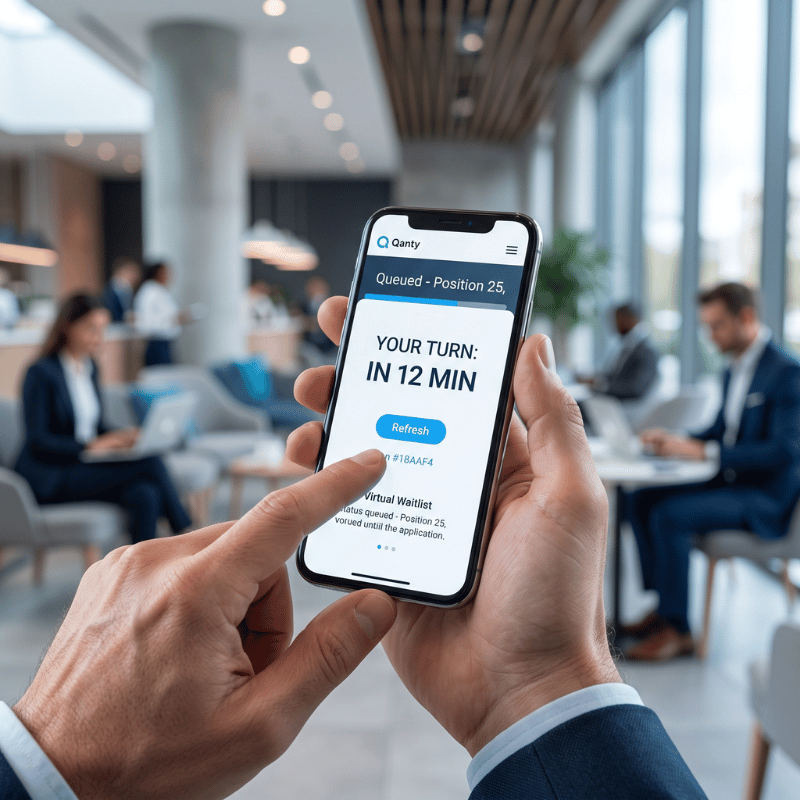

Deploy a world-class waiting experience and regain control of your operations.

To future-proof your business, you must move from reactive crowd control to proactive experience design. Modern systems have moved beyond simple counting. They are now integrated platforms that use Artificial Intelligence and IoT to optimize every second of the customer journey.
In 2026, queue systems don’t just react to crowds; they predict them. By analyzing historical data and real-time foot traffic, AI can alert managers to open a new service desk before the bottleneck occurs. This allows you to automate your customer flow[cite: 1] with surgical precision, reducing idle staff time while ensuring peak hour demands are met flawlessly.
A unified service strategy requires meeting the customer exactly where they are. The queue is no longer confined to the physical store or branch. A customer might join a line on their phone, confirm their arrival via a geofence sensor as they park, and be greeted by name by a staff member who already has their digital file open.
Furthermore, modern solutions recognize returning “VIP” clients or those with special needs, automatically routing them to the most qualified staff member or a priority lane. This level of hyper-personalization ensures a seamless experience, building immense brand loyalty and separating industry leaders from the laggards.


Allow users to join queues via WhatsApp, Web Portals, or on-site Kiosks with real-time syncing.
The primary benefit is the reduction of perceived wait times and customer anxiety. By providing exact ETAs and allowing customers to wait remotely, businesses drastically improve customer satisfaction while optimizing staff allocation.
AI analyzes historical data and real-time traffic to predict surges. This allows operations managers to proactively open new counters or reassign staff before a bottleneck forms, ensuring strict SLA compliance.
Yes. Modern platforms can automatically identify VIP clients, seniors, or those requiring special assistance, routing them instantly to priority queues or specialized agents.
Absolutely. A robust enterprise system features powerful APIs that seamlessly connect with your existing CRM, ERP, or HIS, ensuring agents have the full customer context the moment the interaction begins.
Yes, enterprise-grade solutions are built with granular role management and robust data protection protocols, making them fully compliant and secure for sensitive industries like finance and healthcare.

Streamline your scheduling process and reduce no-shows with an integrated online booking platform.
Leer Más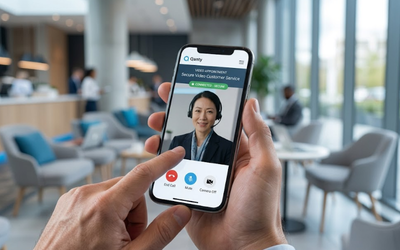
Elevate remote assistance with high-quality, secure video calls tailored for enterprise service centers.
Leer Más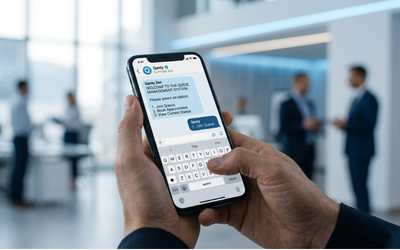
Leverage the world’s most popular messaging app to manage turns and bookings effortlessly.
Leer Más
Connect with our specialists and discover how Qanty can transform your operational efficiency, reduce costs, and elevate your customer satisfaction metrics to new heights.