SIMPLIFY YOUR SCHEDULE, SAVE TIME
Boost your operational metrics with Qanty
The easy, fast, and elegant way to fill your agenda without logistical stress.

Meet Qanty is the leading appointment scheduling platform that automates your entire booking process. Forget manual email back-and-forths; sync your calendar and allow your clients in New York, London, Toronto, Sydney, or anywhere in the world to book available slots through a single unique link.
The appointment scheduling platform Meet Qanty acts as your personal scheduling assistant. You define your availability and your clients or partners choose the most convenient time via an automated link, eliminating unnecessary manual processes.
Discover how Meet Qanty transforms your time and eliminates unnecessary emails.
Recovering time lost to administrative coordination is vital for the profitability of any global executive. In a highly competitive international business environment, the constant exchange of messages and emails to find a common meeting time not only drains your team but also delays the customer service and sales cycles.
This is where Meet Qanty comes into play. It is a solution specifically designed to eliminate operational friction and allow you to schedule appointments professionally, seamlessly, and without any manual effort, ensuring your focus remains on growing your enterprise.
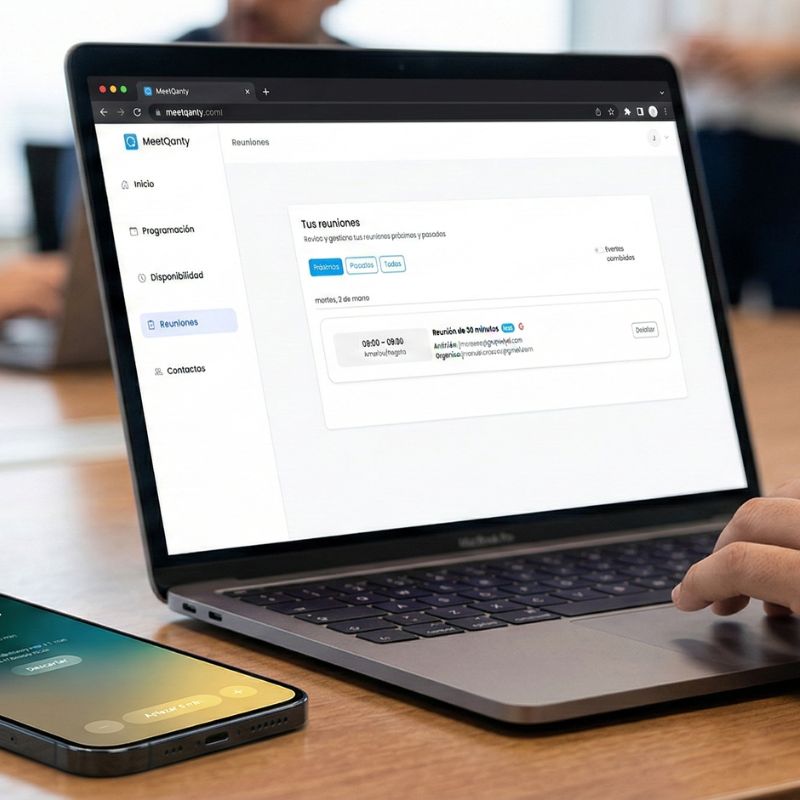
Did you know that an average executive loses up to 5 hours a week just coordinating meetings?
With an automated appointment scheduling platform, you reduce that time to zero, allowing your commercial team to focus on closing deals instead of managing calendars.
Meet Qanty is an appointment scheduling platform that operates autonomously as your personal agenda assistant. Its operational premise is highly effective and straightforward: you define in advance when you are available and let your clients, business partners, or contacts choose the time that best suits them within those parameters.
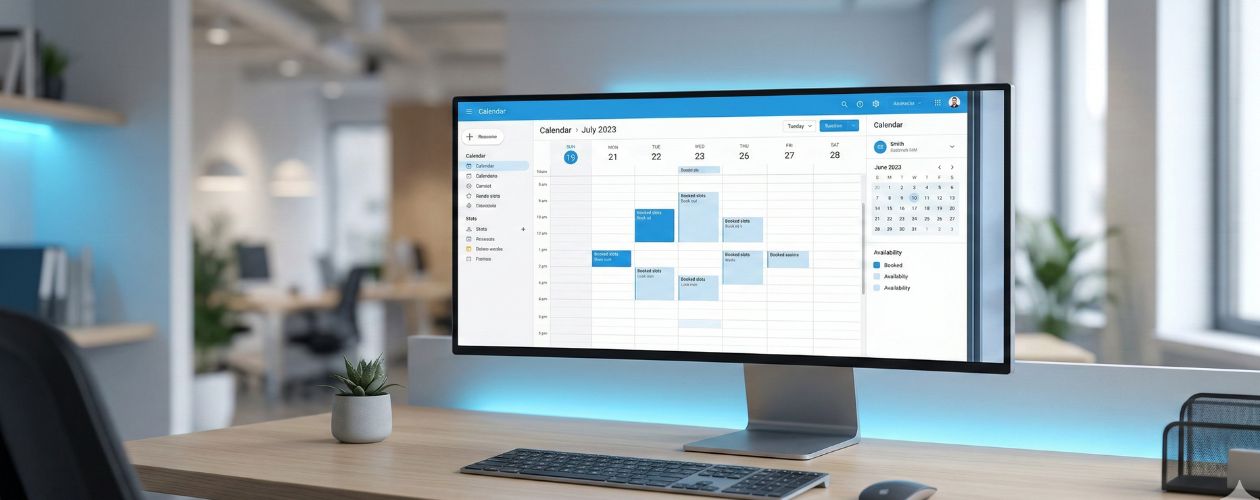
Forget once and for all having to manually check your calendar every time a prospect requests a meeting. With our solution, the entire logistical process of scheduling is delegated and automated through a simple link.
Adopting this tool does not require advanced technical knowledge. Its configuration is designed so that any manager or independent professional can start scheduling meetings immediately without technical complications.
“You define when you are available and allow your clients to choose the time that works best for them, friction-free.”

The easy, fast, and elegant way to fill your agenda without logistical stress.
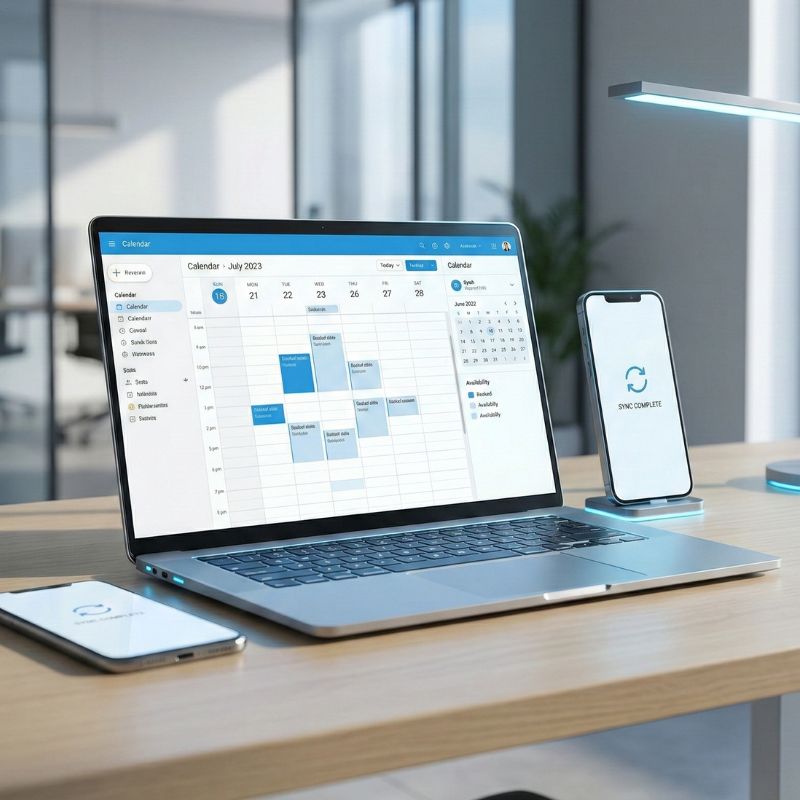
What makes Meet Qanty so effective is its technical capability to sync directly with your personal or work calendar. The platform integrates smoothly with leading corporate ecosystems, ensuring that your availability is always accurate and updated in real-time.
By linking your calendar, Meet Qanty will intelligently read your current events to know exactly when you are busy. Thanks to this synchronization, the tool guarantees that it will never allow a “double booking” or overlapping appointments, protecting the integrity of your daily schedule.

Sending an automated scheduling link projects a high level of organization and respect for your clients’ time.

The platform handles time zones for you, preventing scheduling errors between different cities or countries.

Reclaim valuable hours every week by eliminating the exhaustion of exchanging messages to coordinate a simple meeting.
Once your profile is set up on the platform, your work life changes radically. When a client or business partner wants to meet with you, you no longer have to enter into lengthy scheduling negotiations. You simply streamline the communication and reply: “Absolutely! Please check my availability and choose the time that works best for you here: meet.qanty.com/your-name”.
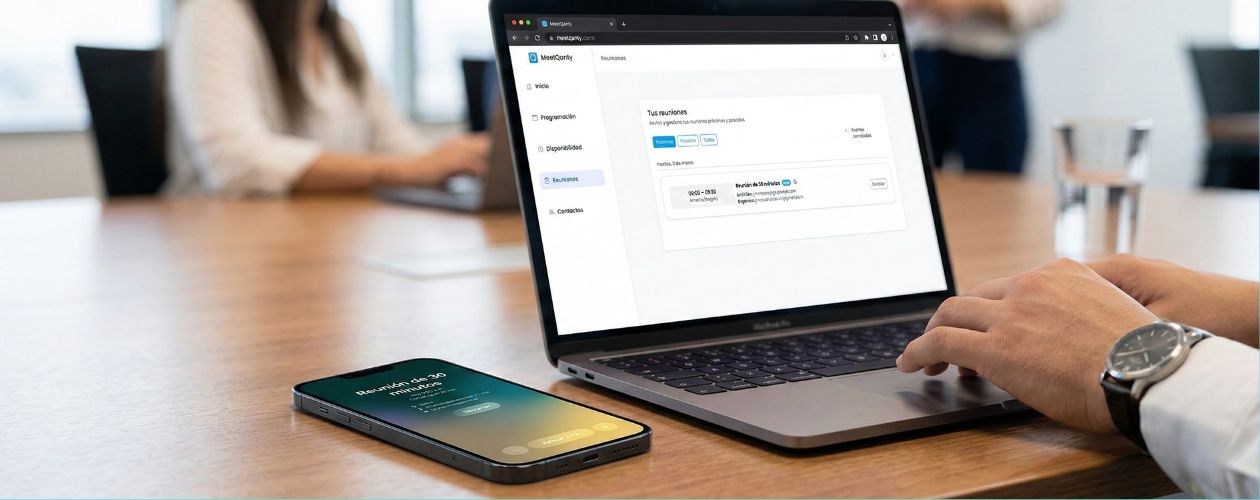
The experience for your guest is flawless. The contact clicks on the link and immediately sees your free slots. From there, they can book the appointment in a matter of seconds, without extensive registrations, enhancing your customer experience (CX).
The workflow closes with total efficiency: once the reservation is made, both parties receive an automatic confirmation. Instantly, the event is reflected in your connected calendar, allowing you to attend your meeting without additional administrative worries.
“Both parties receive an automatic confirmation and the event magically synchronizes in your work calendar.”
Join the professionals who are already optimizing their time and improving their clients’ experience.
Start using Meet QantyMeet Qanty is an advanced tool that functions as your personal agenda assistant, allowing you to define your availability and letting your clients autonomously choose the schedule that best suits them.
Our platform integrates natively with Google Calendar and Microsoft Office 365, ensuring that your professional agenda is always up to date.
No. Meet Qanty reads your calendar in real-time. If you have a personal commitment or a meeting already scheduled, the platform will automatically block that time slot for new clients.
The platform detects the visitor’s location and automatically adjusts your available times to their time zone, eliminating any manual calculation errors.
Start scheduling easily at meet.qanty.com. Register today and transform the way you schedule your professional meetings worldwide, optimizing your time and your clients’ experience.
In the global market, time is the most undervalued asset on financial balance sheets, yet the costliest in terms of customer experience. For a healthcare user or a bank client, a crowded waiting room is a nuisance; for an Operations Director, it is a hidden cost that bleeds profitability and drives churn toward the competition.

Queue Theory, Flow Optimization, and Customer Experience (CX) are not isolated concepts; they are the mathematical foundation of operational efficiency. Discover how to transform passive waiting into a loyalty-building opportunity.
Queue Theory is the mathematical study of waiting lines and service flows. Its business objective is to find the optimal financial balance between the cost of increasing service capacity and the opportunity cost of losing customers due to excessive delays.
The balance between cost and service. Often, companies in sectors such as healthcare, banking, or government view lines simply as “excess demand.” However, under the lens of operational intelligence, a queue is a symptom of process misalignment.
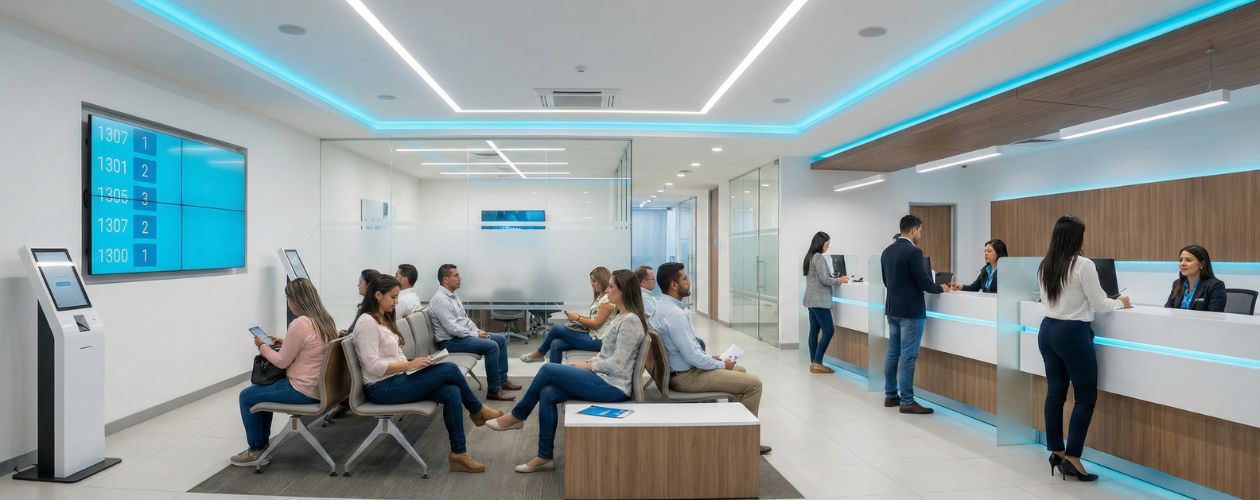
A queuing system is not just about people standing and waiting; it is composed of three critical elements that define the efficiency of your branch:
Today, the “queue” is not just physical. It includes users on hold on the phone, chats waiting for a response, and pending paperwork. Ignoring the science behind these flows is navigating operations blindly.
“Waiting time is the first indicator of respect a brand shows towards its users.”
Understanding the flow equation. For operations managers, Little’s Law is the compass that prevents branch collapse. Although it seems complex, its logic is vital for staff sizing.
The formula defines the health of your system:
Let’s break it down in business terms:
The strategic implication: If your branch is overwhelmed (high L), and you don’t want to stop sales by preventing entry (λ), the only mathematical solution is to drastically reduce the time in system (W). This is where Qanty’s technology makes an impact: streamlining flow without necessarily requiring more staff.

Why does “High Utilization” fail?
Many managers want their advisors busy 100% of the time. This is a mistake. Mathematically, when utilization exceeds 85%, wait times do not grow linearly, but exponentially. A system without “breathing room” collapses under any minor unforeseen event.
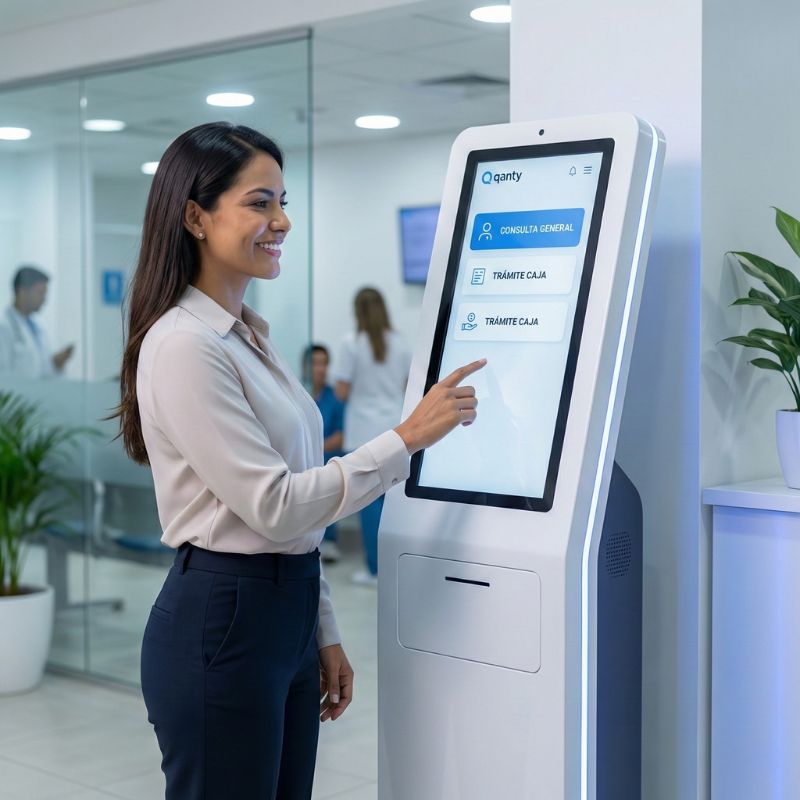
Managing emotions. David Maister, a world authority on service management, demonstrated that customer satisfaction depends not only on clocked minutes but on how that time feels. Mathematics (Little’s Law) handles reality; psychology handles perception.
Applying theory and psychology to improve your operation’s ROI.
The best line is the one that doesn’t exist. Allow your users to take a turn via WhatsApp or Web before arriving. This reduces L (people on-site) without affecting business.
Not all transactions are equal. Segment your customers at the entrance (Kiosk or QR) to direct quick cases to express lanes, lowering the overall average wait time (W).
Display estimated wait times on screens. Knowing that “20 minutes” remain gives control to the user and drastically reduces the abandonment rate.
It allows for correct staff sizing based on real demand, avoiding idle advisors during off-peak hours or collapses during peak hours that generate overtime and customer loss.
It is the formula (L = λ × W) that relates the number of people in your location to the speed of service. Applying it helps identify if the congestion problem is due to demand (marketing) or response capacity (operations).
Psychologically and operationally, the single line is superior. It is perceived as fairer (first come, first served) and is more efficient because it prevents a slow transaction at one counter from delaying a specific group of people.
Perceived time is usually longer than real time if the customer is anxious or bored. Strategies like informative screens or in-room entertainment can reduce wait perception by up to 30%.
Solutions like Qanty offer web scheduling, virtual queues, self-service kiosks, and digital signage, integrating all data to optimize flow in real-time.
Let’s talk about how Qanty can improve the operational efficiency of your branches globally.
In high-stakes healthcare environments, the waiting room is often the greatest operational bottleneck, generating “uncertainty anxiety” and elevating cross-contamination risks. Qanty transforms this friction into flow, positioning itself not merely as a queuing tool, but as a comprehensive Patient Flow & Operational Intelligence Platform designed for modern healthcare facilities.
This guide explores how to optimize Patient Experience (PX), reduce operational costs, and mitigate bio-risks using intelligent automation. We analyze why leading healthcare providers are migrating from legacy manual systems to Enterprise Queue Management Systems like Qanty to streamline their triage and service delivery.
What is a Healthcare Patient Flow System?
It is an operational intelligence platform that digitizes the entire patient journey—from remote check-in to post-care feedback. Unlike simple ticket dispensers, it uses real-time data to orchestrate triage, manage capacity, and reduce physical crowding, ensuring compliance with health standards and improving SLA performance.
Perception is reality in patient care. The most stressful component of an Emergency Room (ER) or clinic visit isn’t always the medical wait itself—it is the lack of information. Patients sitting for undefined periods experience high levels of cortisol, often leading to aggression towards staff and negative review scores.
Qanty addresses this through an omni-channel communication architecture. By pushing real-time status updates via WhatsApp, SMS, or on-site digital signage, we allow patients to wait in lower-stress environments—such as their car, a cafeteria, or a quieter area of the facility—rather than being tethered to a crowded lobby chair.
When patients feel their time is respected, Net Promoter Scores (NPS) rise. Transforming the “black box” of triage into a transparent process is the quickest win for Patient Experience (PX) directors.
“Transparency is the new standard of care. It shifts the dynamic from passive waiting to active engagement.”
Turn chaotic waiting rooms into streamlined care hubs.
Data-driven staffing decisions. Nursing staff and administrators often spend disproportionate resources managing crowd control rather than clinical care. Qanty functions as an operational brain, automating the flow logic based on real-time facility conditions.
Our platform enables Automated Triage Routing, directing patients to specific queues based on severity (e.g., Triage Level 1 vs. Level 4) or required specialty. This ensures critical cases are prioritized algorithmically, reducing manual sorting errors and optimizing the utilization of medical resources.
Key Insight: The Cost of Idleness
Healthcare facilities using automated patient flow systems report a 20-30% reduction in administrative overhead related to check-in and directional guidance.
Mitigating bio-risks through technology. In a post-pandemic landscape, a packed waiting room is a liability. Crowding potential infectious carriers in confined spaces increases the risk of nosocomial (hospital-acquired) infections. Qanty acts as a digital decongestant.
By enabling remote check-ins and Just-in-Time (JIT) calling, facilities can keep lobby occupancy below safe thresholds. This “Virtual Waiting Room” capability is essential for protecting vulnerable patients and staff, ensuring compliance with modern health safety standards.
Cloud-native agility. One of the biggest barriers to adopting new Hospital Information Systems (HIS) is the fear of complex implementation. Qanty is designed to be frictionless. Our cloud-based queue management solutions do not require heavy proprietary servers or expensive rewiring.
Whether integrating with standard tablets, existing Smart TVs for signage, or web kiosks, the deployment is rapid. For IT Directors, this means a solution that scales from a single urgent care clinic to a multi-site hospital network with centralized management and enterprise-grade security protocols.
Track average wait times, service duration, and staff performance to optimize shift planning.
Allow patients to self-identify symptoms upon check-in to prioritize urgent cases automatically.
Role-based access control and secure data handling to meet corporate IT standards.
Qanty is hardware-agnostic. It can utilize any web-enabled display or Smart TV to show queue status, meaning you don’t need to purchase proprietary monitors.
Yes. Qanty is built for complex logic, allowing you to route patients through multiple steps (e.g., Reception -> Triage -> Lab -> Doctor) within a single ticket journey.
Absolutely. While we offer mobile check-in, Qanty also supports physical kiosks and printed tickets for walk-in patients or those less comfortable with technology.
By automating the “next please” process and routing, staff save hours daily on crowd management. The analytics dashboard also highlights peak times for better staff scheduling.
Yes. The “Sub-company” architecture allows holdings to manage multiple locations centrally while keeping data segregated and secure for each branch.
The definitive guide to optimizing customer flow in large-scale organizations.
Read MoreStreamline your booking process and reduce no-shows with automated reminders.
Read MoreImprove communication and reduce perceived wait times with smart screens.
Read More
Join the healthcare leaders using Qanty to improve NPS and Operational Efficiency.
In the age of instant gratification, a physical queue is a visible sign of operational inefficiency. For enterprise leaders in Healthcare, Retail, and Government, digital queue management is no longer just about comfort—it is a critical tool for operational intelligence, data capture, and maximizing customer lifetime value.
This guide explores how to transform customer throughput, reduce operational costs, and deploy predictive analytics using Qanty. We move beyond simple ticketing to a comprehensive Enterprise Queue Management System that integrates seamlessly with your existing IT infrastructure.
Digital Queue Management is a cloud-based technology that digitizes the customer arrival and waiting process. It replaces physical lines with virtual slots, allowing organizations to route customers efficiently, balance staff workloads using real-time data, and significantly improve the Net Promoter Score (NPS) by respecting the user’s time.
Visibility is the precursor to control. Traditional queuing methods create operational blind spots. When customers stand in a physical line, you don’t know who they are, why they are there, or how long they are willing to wait until they reach the counter. This lack of data leads to poor staffing decisions and lost revenue.
Qanty transforms this dynamic by digitizing the arrival process. By capturing the customer’s intent at the very beginning of the journey—whether via a web booking, a WhatsApp bot, or a self-service kiosk—operations managers gain immediate visibility into the “Demand Pending” metrics.
Failing to digitize the queue results in “invisible churn”—customers who see a line and leave before ever interacting with your brand. Qanty captures these interactions, turning walk-aways into scheduled appointments.
“Efficiency isn’t about working faster; it’s about eliminating the friction that slows you down.”
Did you know?
Retail analytics indicate that 86% of customers will avoid entering a store or branch if they perceive the line to be too long. Digital queuing recovers this lost traffic by making the wait invisible.
Omnichannel isn’t just a buzzword; it’s the standard. Qanty operates as a central nervous system for customer reception. We acknowledge that different demographics prefer different engagement channels.
For tech-savvy users, the Virtual Waitlist App allows remote check-in. for walk-ins, self-service Kiosks reduce the burden on reception staff. For ongoing communication, our integration with WhatsApp ensures customers receive real-time status updates without needing to download a proprietary app.
This flexibility ensures that whether you are running a high-volume hospital ER or a premium banking center, the entry point is frictionless.
Deploy the world’s most flexible queue engine.
Data is the new currency of management. Beyond the customer interface, Qanty is a powerful Business Intelligence (BI) tool. By tracking every step of the service lifecycle—from ticket issuance to service completion—we generate granular reports on staff performance.
Using a robust queue management system allows Operations Directors to identify bottlenecks instantly. Which branch has the highest wait times? Which service agent handles requests the fastest? With Qanty’s real-time dashboards and semantic alerts, these questions are answered automatically, allowing for agile resource reallocation.
How Qanty structures value for large organizations.
Reduce perceived wait times by 40% through psychological engagement and transparent communication via digital signage and mobile alerts.
Empower staff with “Next-Best-Action” logic. The system prioritizes VIPs, elderly, or urgent cases automatically, removing manual triage errors.
Centralized reporting for holdings and multi-branch networks. Compare performance across regions and standardize best practices.
Built for the Enterprise. We understand that for IT Leaders, security and integration are non-negotiable. Qanty is architected as a cloud-native solution, ensuring 99.9% uptime and elastic scalability to handle peak loads during seasonal rushes or public emergencies.
Our RESTful API facilitates deep integration with your existing ecosystem—whether it’s a Hospital Information System (HIS), a CRM like Salesforce, or a legacy ERP. Data is encrypted both in transit and at rest, complying with global data protection standards.
From single-tenant deployments for sensitive government data to multi-tenant SaaS for rapid retail scaling, Qanty offers the deployment model that fits your compliance requirements.
“True scalability means the system grows with you, without requiring a complete re-architecture.”
Technology is only as good as its adoption. Implementing a digital queue system requires a clear change management strategy. At Qanty, we recommend a phased approach.
Start with a pilot in high-volume branches to gather baseline data. Ensure clear signage guides customers to the new digital entry points (QR codes or Kiosks). Most importantly, train your staff not just on the software, but on the new soft skills required for a more personal, less transactional service environment.
Yes, Qanty features a robust API that allows for two-way synchronization with major CRMs, ERPs, and Hospital Information Systems, ensuring a unified customer view.
Absolutely. Qanty is designed for holdings and enterprises. You can manage hundreds of branches from a single “Super-Admin” dashboard, with granular reporting for each location.
No. Qanty uses browser-based technology (Progressive Web App). Customers can join the queue via QR code, WhatsApp, or a web link without installing anything on their phones.
Qanty is hardware-agnostic. It works on standard Smart TVs (for signage), tablets, PCs, or dedicated kiosks. We can recommend hardware partners or utilize your existing assets.
We prioritize data sovereignty and security. Our architecture uses enterprise-grade encryption, and we offer compliant deployment options for sectors like Healthcare (HIPAA compliant logic) and Banking.
Streamline your booking process and reduce no-shows with automated reminders.
Read MoreLeverage the world’s most popular messaging app to manage customer flows.
Read MoreTransform waiting screens into communication channels.
Read More Join the leading organizations that are redefining customer experience with Qanty. Schedule a consultation today.
In an Emergency Room, communication gaps are not just inconveniences; they are clinical risks. Discover how an ER patient notification system bridges the divide between the front desk and triage, ensuring nurses stay ahead of patient arrivals and improving safety metrics instantly.
This guide details how Qanty connects registration staff with triage nurses in real-time. We explore the impact of automated alerts on triage speed, patient safety, and the overall efficiency of your queue management system in high-pressure healthcare environments.
An ER patient notification system is a digital communication layer that instantly alerts medical staff when a patient registers at the front desk. By replacing manual calls and radios with real-time dashboard updates, hospitals can significantly reduce the “door-to-doc” time and ensure immediate triage for high-risk patients.
Silence in the ER can be dangerous. In traditional setups, a patient might register at the front desk, but the triage nurse—busy in a treatment room—might not know they exist until a file is physically walked over or a phone call is made. This latency creates a “blind spot” where patient deterioration can occur unnoticed.
Qanty eliminates this latency. The moment a patient details are entered at reception or via a self-service kiosk, the ER patient notification system triggers an instant visual and auditory alert on the nursing station dashboards. This ensures that the clinical team has total situational awareness of the waiting room census without needing to leave the treatment area.
By automating the notification process, hospitals using Qanty have seen a measurable reduction in the time between patient arrival and initial clinical assessment, a key performance indicator (KPI) for accreditation and patient safety.
“In emergency medicine, information speed is as critical as clinical skill.”
Key Statistic
Studies indicate that communication failures are a leading cause of inadvertent patient harm in hospitals. Automating the arrival notification removes human error from the most critical step of the patient journey.
Not all patients can wait. Qanty allows hospitals to configure “Smart Alerts” based on intake data. If a patient or registration clerk selects symptoms associated with high acuity (e.g., chest pain, difficulty breathing), the system overrides standard queue logic.
These priority flags flash urgently on the nurse’s dashboard, ensuring that potential cardiac or stroke cases bypass the standard line. This automated risk stratification supports the triage nurse’s decision-making process, ensuring that the most critical patients are seen first, regardless of arrival order.
Reduce chaos and improve patient safety metrics.
You cannot manage what you cannot see. For the Charge Nurse or Department Director, Qanty serves as a command center. A centralized dashboard displays the entire department’s status at a glance: how many patients are waiting, average wait times, and bed occupancy.
This queue management automation allows for dynamic resource allocation. If the waiting room spikes, leadership can instantly reassign staff from administrative tasks to triage or call in backup, preventing bottlenecks before they become critical incidents.
Notifications appear on desktop monitors, tablets, and mobile devices, ensuring alerts follow the nurse.
Patient data is encrypted and roles are strictly managed, ensuring privacy and regulatory compliance.
Connects seamlessly with your existing Hospital Information Systems to avoid double data entry.
Uncertainty breeds anxiety and aggression. One of the biggest challenges in an ER waiting room is managing patient expectations. When patients feel ignored or forgotten, tension rises, which can lead to security issues and poor satisfaction scores.
Qanty improves the patient experience by providing transparency. Using HIPAA-compliant digital signage, patients can see their anonymized status in the queue or estimated wait times. Knowing that they are “in the system” and that staff are aware of their presence significantly lowers anxiety levels and reduces the frequency of interruptions at the front desk.
When patients see an organized, digital flow, their trust in the clinical competence of the facility increases. They perceive the hospital as modern, efficient, and in control.
“A calm waiting room is the first step towards a successful clinical outcome.”
Operational decisions should be based on facts, not feelings. Qanty tracks every interaction, creating a goldmine of data for Hospital Administrators. By analyzing the “Arrival-to-Triage” and “Triage-to-Bed” timestamps, leadership can identify chronic bottlenecks.
Are Monday mornings consistently understaffed? Does the night shift have longer response times? Qanty’s reporting module answers these questions, allowing for evidence-based staffing adjustments that improve both the bottom line and patient outcomes.
Qanty updates a centralized dashboard in real-time. This dashboard can be displayed on large wall-mounted screens in the nurses’ station, desktop computers, or tablets/mobile devices carried by staff.
Yes. Qanty is designed with privacy in mind. Public-facing screens use anonymized codes or ticket numbers, while detailed patient information is restricted to authorized staff devices via role-based access control.
No. Qanty is a tool to support the triage nurse, not replace them. It ensures they are aware of patient arrivals instantly, allowing them to perform their clinical assessment faster and more efficiently.
Qanty is built on a robust cloud architecture with offline capabilities for critical functions. However, we recommend redundancy for critical healthcare environments to ensure 100% uptime.
Absolutely. Qanty offers an open API that allows for integration with major Electronic Health Record systems, enabling seamless data flow and preventing double entry of patient demographics.
Optimizing Patient Care and reducing wait times through digital automation.
Read MoreStrategies for improving the waiting experience and operational efficiency.
Read MoreTransform waiting areas into dynamic communication channels to improve CX.
Read More Contact us today for a specialized consultation on Healthcare Flow Management.
In this guide, you will learn what NPS is, how it is calculated through Promoters, Passives, and Detractors, and why it is considered a benchmark for growth. We will also explore the steps to implement NPS in your business—from survey design to data analysis—and share best practices to turn feedback into actionable strategies.
The Net Promoter Score (NPS) is a key metric to measure customer loyalty and predict growth. Based on a simple question, it classifies responses into Promoters, Passives, and Detractors, offering a clear view of brand perception. With NPS, businesses can track satisfaction, identify areas for improvement, and design strategies to strengthen customer relationships and long-term engagement.

Turn satisfaction into growth with NPS insights
In today’s highly competitive market, understanding how satisfied and loyal your customers are has become a strategic priority. One of the most widely used tools to measure this is the Net Promoter Score (NPS). This simple yet powerful metric helps organizations assess the likelihood that customers will recommend their brand to others, offering valuable insight into customer satisfaction and loyalty.

The Net Promoter Score (NPS) is a metric based on one straightforward question:
“On a scale of 0 to 10, how likely are you to recommend our company/product/service to a friend or colleague?”
Based on their response, customers are grouped into three categories:
The NPS is calculated by subtracting the percentage of Detractors from the percentage of Promoters:
NPS = %Promoters − %Detractors
The score can range from -100 to +100, giving businesses a clear indication of overall customer sentiment.
Key Fact on Customer Experience
NPS not only measures satisfaction, but also predicts customer loyalty. Companies with a high NPS grow up to 2.5 times faster than their competitors.
The Net Promoter Score (NPS) has become a global standard because it delivers several key benefits that go beyond traditional satisfaction surveys. Its simplicity and action-oriented nature make it one of the most effective tools for improving customer experience.
One core question makes it easy to collect and interpret results, reducing complexity for both customers and companies.
It measures true commitment through the willingness of customers to recommend, not just short-term satisfaction.
Companies with higher NPS often experience stronger organic growth, as happy customers generate referrals.
NPS makes it possible to compare results over time, across industries, and against competitors.
It highlights areas that need improvement and helps organizations focus on strategies that enhance customer experience.
To get the most value out of Net Promoter Score (NPS), it’s essential to implement it in a structured and consistent way. Each step ensures meaningful insights and drives action toward improving customer experience.
Decide what you want to measure: overall brand experience, satisfaction after a specific purchase, or feedback after support interactions.
Keep the NPS question simple. Add an open-ended follow-up like: “What’s the main reason for your score?” to get context-rich feedback.
Send surveys at key touchpoints: after a purchase, following support, or periodically (quarterly/biannually) to track long-term loyalty.
Identify Promoters, Passives, and Detractors. Calculate your NPS and review open comments to uncover recurring themes.
Use insights to reduce Detractors, strengthen Promoters’ loyalty, and convert Passives into Promoters through improvements.
Share findings internally, communicate improvements, and show customers that their feedback drives change—building trust and engagement.
To maximize the value of the Net Promoter Score (NPS), it’s important to follow a set of best practices that ensure accuracy, consistency, and actionable insights for your business.
At Qanty, we can help you easily implement and track this metric for your business. Contact us today to schedule a free consultation.
The Net Promoter Score (NPS) is a metric that measures customer loyalty by asking how likely they are to recommend your product or service to others.
NPS doesn’t just measure satisfaction—it measures loyalty. It helps identify promoters, passives, and detractors, allowing you to predict growth and improve the customer experience.
It’s best to keep surveys short and focused, avoiding over-surveying customers to get more accurate and useful responses.
Analyze feedback from promoters and detractors to find areas for improvement. Combine NPS with other customer experience metrics for a fuller picture.
Yes. Companies with high NPS often see organic growth because satisfied customers generate referrals and recommend your brand to others.
Every rating, every comment, every NPS score tells a story about how your customers feel. With Qanty, you can turn those insights into real actions that elevate satisfaction, build stronger relationships, and grow your brand with confidence.
In the high-stakes landscape of modern service industries, time is the most volatile currency. For large-scale operations in healthcare, retail, and banking, the inability to manage customer flow doesn’t just result in complaints—it bleeds revenue. Transforming this liability into an asset requires more than a simple ticket dispenser; it demands a comprehensive strategy of operational intelligence.

Effective Customer Experience (CX) relies on predictability. Unmanaged congestion creates operational blindness and lowers NPS. By implementing an enterprise-grade Queue Management System, organizations can digitize the customer journey, reducing wait times by up to 40% while capturing critical data to optimize staff allocation and service efficiency.
What is Operational Intelligence in CX? It is the use of real-time data from queue management and scheduling systems to make immediate decisions—such as opening new counters or reallocating staff—ensuring service levels (SLA) are met dynamically.
Uncertainty destroys value. Customers today do not evaluate your service solely based on the outcome, but on the effort required to receive it. When a client arrives at a branch, clinic, or service center and faces an unpredictable wait, the perception of value drops immediately. This friction is a primary driver of churn.
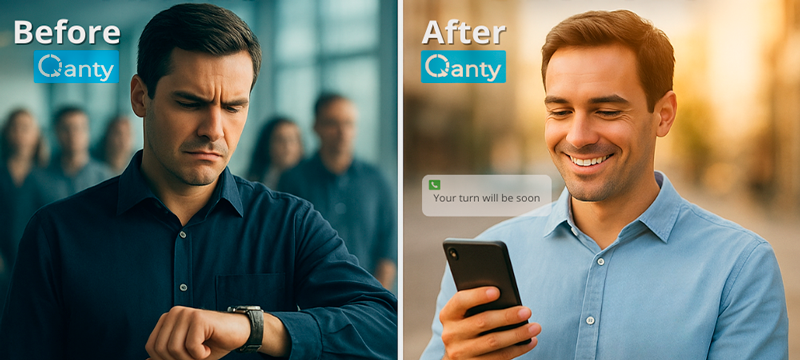
Beyond the customer sentiment, the operational cost is staggering. Without a digital flow management system, floor managers operate blindly. They cannot predict peak hours accurately or measure the actual productivity of their staff. This lack of visibility leads to overstaffing during quiet periods and understaffing during critical rushes, inflating operational costs.
Modern enterprises must shift from reacting to crowds to preventing them. Qanty acts as a central nervous system for your physical locations, orchestrating the flow of people and providing the transparency needed to maintain high standards of service delivery.
“The wait itself isn’t the problem; the lack of information and control is what drives customers away.”
Increase efficiency, reduce costs, and delight your customers.
Agendas that work for you. Traditional booking systems often fail because they don’t account for the complexity of services. Qanty’s scheduling engine is designed for high-volume environments, allowing organizations to manage complex calendars across multiple branches seamlessly.
By implementing a robust appointment scheduling system, you shift demand from peak hours to off-peak times. The platform allows customers to self-schedule via web or mobile, reducing call center volume. More importantly, it allows your operations team to configure rules—reserving specific slots for VIPs, seniors, or complex procedures—ensuring that the right resources are available at the right time.
Psychology of Waiting
Studies show that occupied time feels shorter than unoccupied time. By allowing customers to wait virtually (outside the lobby), their anxiety decreases, and their perceived satisfaction with the service increases significantly.
Mobility is the new standard. The era of the crowded waiting room is ending. Qanty’s virtual queue technology allows walk-in customers to scan a QR code, take a digital ticket, and leave the physical premises. They can wait in their car, a nearby coffee shop, or continue shopping while tracking their status in real-time.
This “Wait from Anywhere” approach solves two critical problems: it decompresses physical waiting areas (reducing health risks and anxiety) and it respects the customer’s time. The system sends automated alerts via WhatsApp or SMS when their turn is approaching, ensuring a just-in-time arrival that maximizes flow efficiency.
Data is your competitive advantage. Implementing Qanty goes beyond managing lines; it is about installing a data-gathering engine within your physical operations. Every interaction—from check-in to service completion—is tracked, measured, and analyzed.
With Qanty’s advanced analytics, managers can visualize heatmaps of branch traffic, identify bottlenecks in specific service types, and monitor employee performance against established KPIs. This allows for data-driven decisions, such as adjusting opening hours based on actual demand patterns or identifying training needs for staff members with higher-than-average handling times.
Our platform transforms raw data into simplified reports for executive review, focusing on:
Immediate notifications to supervisors when wait times exceed defined SLA thresholds.
Comparative reports across branches to benchmark performance and standardize quality.
Seamless integration of web appointments, WhatsApp bots, and physical kiosks.
Qanty provides real-time metrics on transaction times and idle periods. This visibility allows managers to allocate staff efficiently based on actual demand, reducing downtime and ensuring high-performance standards.
Yes, Qanty is built with a robust API architecture designed for interoperability. We can integrate with major CRM, HIS (Healthcare Information Systems), and ERP platforms to ensure data flows seamlessly across your ecosystem.
Absolutely. While mobile options exist, Qanty also supports physical kiosks and ticket dispensers. The system is designed to be inclusive, ensuring that every customer, regardless of digital literacy, can access the service easily.
Qanty is a cloud-native SaaS platform, which allows for rapid deployment. While timelines vary based on customization needs, most enterprise rollouts are fully operational within weeks, not months.
Security is a priority. Qanty offers granular role management, data encryption, and compliance with enterprise security standards to protect both your business intelligence and your customers’ personal data.
Discover how to automate bookings and reduce no-shows with smart reminders.
Read MoreExtend your reach with a secure platform for virtual appointments and hybrid care.
Read MoreImprove communication in waiting areas with integrated digital displays.
Read More
Contact our experts today and discover how Qanty can reduce wait times and boost your operational efficiency.
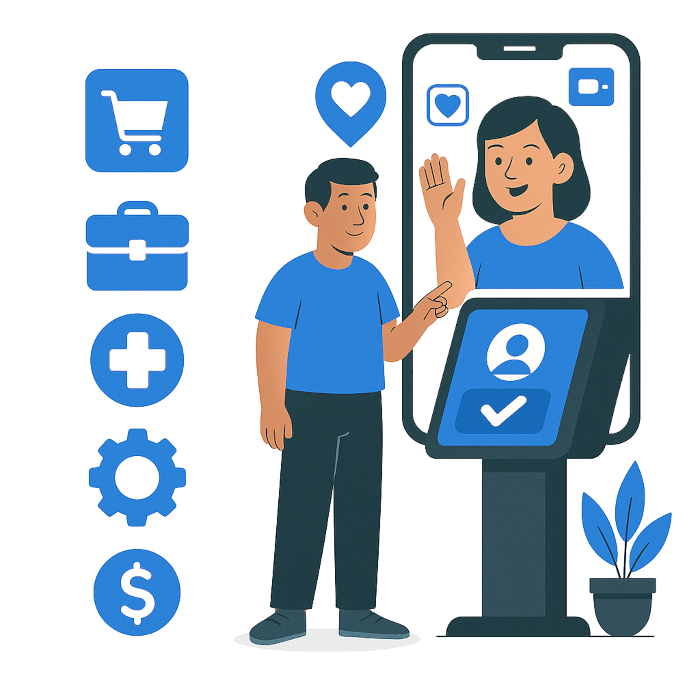
At Qanty, we’re redefining customer experience through smart technology. Our queue management system is built to reduce wait times, improve service, and boost operational efficiency. It integrates seamlessly with self-service kiosks, smart service points, and video call modules—all powered by leading global brands that ensure quality, innovation, and dependable support.
At Qanty, we create technology solutions with a clear goal: to transform the way people experience customer service. And we do it with one non-negotiable principle: we only work with the best brands in the market. Our queue management system, for example, is built with components from Intel, HP, Epson, Elo Touch, Dell, Kingston, Honeywell, Bixolon, and Star Micronics.

These aren’t just logos—they’re a guarantee of performance, reliability, and support. They’re our technology partners, helping us deliver solutions that are robust, efficient, and scalable—especially in high-demand environments where every second matters and user experience defines business success.
Our queue system isn’t just about organizing lines—it’s a core part of a larger service ecosystem. It connects with self-service kiosks, smart counters, and video call modules, all tailored to your organization’s specific needs and supported by high-quality hardware you can trust.
Thanks to the compatibility and quality of the devices we use, we ensure smooth and lasting integration between software and hardware—no surprises, no last-minute fixes.
In industries like retail, entertainment, healthcare, or public services, technology can’t afford to fail. That’s why we choose to work with manufacturers that share our commitment to excellence. Every Elo Touch screen, every Intel processor, every Epson printer, and every Honeywell terminal is part of a bigger solution—designed to perform, last, and grow with your business.
These brands help us go beyond expectations: enhancing your customer experience, streamlining your operations, and making your team’s job easier. That’s the real value of building on a solid foundation.
Today, everyone’s talking about digital transformation. At Qanty, we believe that transformation starts with something as essential as excellent customer service. And to make it happen, you need technology that works—technology that’s tested, proven, and backed by trusted brands.
With Qanty, you’re not just implementing a queue management system—you’re investing in quality.
In an era where digital agility defines market leadership, credit unions face a pivotal challenge: how to humanize digital interactions without sacrificing operational efficiency. The answer lies not just in technology, but in connection.
Digital Transformation, Member Experience, and Operational Efficiency are the pillars of modern banking. This guide explores how Video Banking platforms enable credit unions to deliver personalized, face-to-face financial services remotely, reducing branch overhead while increasing member satisfaction. Discover how Secure Video Customer Service Platforms are redefining the standard for hybrid banking.
What is Video Banking? Video banking is a secure, remote service channel that allows members to interact face-to-face with financial advisors via mobile or web. It combines the convenience of digital banking with the trust and personalization of in-branch visits, often integrated with appointment scheduling software and document signing capabilities.
Bridging the gap between digital convenience and human trust. As credit unions navigate a rapidly evolving landscape, the pressure to offer convenient yet personalized experiences is at an all-time high. Video banking has emerged as a powerful tool, enabling institutions to maintain close, advisory-level service relationships while significantly expanding accessibility.

Implementing a robust video strategy is no longer about novelty; it’s about business continuity and operational optimization. It allows you to centralize specialized talent (like mortgage advisors) and make them available across your entire branch network instantly.
Modern banking is hybrid. Members expect to start a loan application on their phone and finish it with a human advisor without stepping into a branch. A Queue Management System integrated with video capabilities ensures this transition is seamless.
“Technology should not replace the human touch; it should scale it.”
Unified Video, Scheduling, and Branch Analytics.
Selecting the technology that defines your member journey. Not all platforms are created equal. The market leaders distinguish themselves not just by video quality, but by how well they integrate into the broader banking ecosystem, including core banking systems, CRMs, and scheduling workflows.
Best for: Appointment-Driven Engagement. Coconut Software focuses heavily on the scheduling aspect, ensuring that members can book time with the right advisor. Their video banking is a natural extension of their appointment setting, making it a solid choice for institutions that rely heavily on pre-booked consultations rather than on-demand service.
Did you know?
Video banking appointments result in a 30% higher close rate for complex financial products compared to phone or text-only channels.
Best for: Knowledge Management Integration. Engageware (formerly TimeTrade) excels in connecting members with resources. Their platform often couples scheduling with intelligent knowledge bases, helping staff answer questions faster during video calls.
Best for: End-to-End Operational Intelligence & Hybrid Flows.
Qanty goes beyond simple video calls. It is a comprehensive Customer Experience Operating System. It unifies appointments, virtual waitlists, and video banking into a single, cohesive dashboard.
Unlike standalone video tools, Qanty manages the entire flow: from the moment a member books an appointment or enters a virtual queue, to the video consultation, and finally to the post-service NPS feedback. It empowers Credit Unions to visualize and optimize branch traffic and digital demand in real-time.
End-to-end encryption and compliance with global financial data protection standards.
Track wait times, service duration, and member satisfaction across both physical and video channels.
Seamlessly switch between Chat, Voice, and Video without disconnecting the session.
Investing in scalability and integration. When evaluating these platforms, look beyond the feature list. Consider the long-term impact on your IT infrastructure and your member loyalty.
Prioritize platforms that offer robust APIs for integrating with your existing CRM and Core Banking systems. The goal is to have a “Single Pane of Glass” where advisor efficiency is maximized, not hindered by toggling between multiple disparate apps.
Video banking is a necessity for modern credit unions. However, the real competitive advantage comes from using a platform like Qanty that transforms these interactions into actionable data and seamless journeys, optimizing your entire operation from the cloud.
Yes, enterprise-grade video banking platforms use end-to-end encryption and comply with strict financial regulations (like GDPR and PCI-DSS) to ensure all member data and conversations remain private and secure.
Most top-tier platforms, including Qanty, offer API integrations that allow them to sync with CRMs and core banking systems, providing advisors with real-time member data during the call.
Not necessarily. Modern solutions like Qanty offer browser-based access (WebRTC), allowing members to join secure video calls instantly via a link without downloading any software.
It allows credit unions to centralize specialized staff. Instead of having a loan officer in every branch, one expert can serve members from multiple locations via video, maximizing staff utilization.
specialized platforms provide banking-specific features such as secure document signing, identity verification, virtual waiting rooms, and integration with banking workflows, which standard tools like Zoom lack.
Discover how Qanty can help you reduce wait times, increase staff efficiency, and deliver superior video banking services today.
In the competitive landscape of modern finance, the disconnect between digital convenience and human trust is becoming a critical vulnerability. While mobile apps efficiently handle routine transactions, high-value financial decisions still require a human touch that chatbots and IVR systems simply cannot replicate. The banks that will lead the market are those that can humanize their digital channels without sacrificing efficiency.
Videobanking, Virtual Branch, and Customer Experience are redefined with Qanty’s platform. This guide explores how transforming your customer service with secure, high-definition video assistance not only reduces friction but significantly increases first-contact resolution and customer lifetime value.
Videobanking is a secure, real-time customer service channel that allows financial institutions to offer face-to-face advisory services remotely. Unlike standard video calls, it integrates with banking core systems, queue management flows, and security protocols to enable legally binding transactions and high-value consultations from anywhere.
Friction destroys loyalty. Consider a common scenario: A high-value corporate client needs to approve an urgent international transfer, but the banking app flags it for security. They call support, wait 40 minutes on hold, and when they finally reach an agent, the call drops. This is not just a nuisance; it is a business risk.
)
This reality plagues thousands of customers daily. Visiting a physical branch involves wasted time in queues, while call centers often result in repetitive identity verifications and impersonal transfers. Chatbots, while useful for balance checks, often fail when complex problem-solving is required, leaving the customer in a loop of “I didn’t understand that.”
Your customers’ wealth shouldn’t depend on automated replies. Real trust is built when a customer can see the advisor handling their money. Videobanking restores this connection, offering the immediacy of digital with the empathy of face-to-face interaction.
“Technology should not distance the bank from the customer; it should bring the branch to their living room.”
DID YOU KNOW?
Banking interactions via video result in a 30% higher Close Rate compared to phone or chat, as the visual connection increases trust and allows for real-time document sharing.
Seamless, Secure, and Immediate. Qanty’s Videobanking is not just a video tool; it is a Virtual Branch. Imagine a system where your customer doesn’t have to guess how long they will wait. They join a digital queue, see their estimated wait time, and are connected to a specialized advisor who already knows their profile.
Unlike consumer-grade video apps, Qanty allows for:
)
Qanty provides a robust infrastructure designed for the rigorous demands of the banking sector.
End-to-end encryption ensures that sensitive financial discussions and data remain private and compliant with global regulations.
Automatically record and archive sessions for compliance audits, quality assurance, and dispute resolution.
Advisors can share screens to walk customers through loan applications or contracts in real-time, reducing error rates.
)
Data-Driven Service. Implementing video is not just about the channel; it’s about the data. Qanty transforms your service center into an intelligent operation hub. Our dashboard provides real-time metrics on wait times, average handle times (AHT), and customer satisfaction (CSAT) specifically for your video channel.
This allows Operations Managers to:
)
Reduce costs and increase trust with Qanty Videobanking.
A Global Standard. In an era of increasing cyber threats, Qanty prioritizes the integrity of your data. Our architecture is designed for enterprise environments, supporting integration with Core Banking Systems via secure APIs, ensuring that customer data flows seamlessly but securely.
Banks that listen to their customers and adapt to their lifestyle will lead the future. Banking services shouldn’t be a headache. With Qanty, technology doesn’t replace the human element; it elevates it, providing a premium experience that differentiates your institution from the competition.
If you are looking to transform your bank’s customer experience (CX) and offer seamless, real advisor support without long waits, Qanty is the strategic partner you need.
No. Qanty uses WebRTC technology, allowing customers to join a secure video session directly from their mobile or desktop browser with a single click, eliminating friction.
Yes. All video transmissions are encrypted end-to-end. Qanty complies with enterprise security standards to ensure that sensitive client data remains protected.
Absolutely. Qanty features a robust API that allows for integration with CRMs, Core Banking Systems, and existing appointment scheduling software.
Yes, sessions can be automatically recorded and archived securely, allowing for compliance audits, dispute resolution, and quality assurance reviews.
Qanty’s adaptive streaming technology automatically adjusts video quality based on the user’s connection speed to ensure audio clarity and connection stability, even on mobile networks.
Join the leading financial institutions that are increasing retention and sales with Qanty.